Does Henna Powder Expire? Shelf Life and Storage Tips

Yes, henna powder does expire. The good news: it’s not a safety crisis when it does. The real loss is potency. Lawsone, the active dye molecule in henna, breaks down over time through oxidation, and once it degrades past a certain point, your stain goes from a rich, deep brown to a barely-there orange whisper.
Here’s what you need to know upfront:
Henna powder retains potency for 3 to 5 years if stored airtight, cool, and dry, based on ideal storage conditions.
Heat, humidity, and air exposure speed up degradation
Expired henna is generally ineffective, not harmful
Smell, color, and texture are your fastest spoilage checks
How long does henna powder actually stay good?
Under ideal conditions, henna powder retains its potency for years when stored airtight, cool, dry, and away from light.
Higher temperatures and humidity accelerate potency loss significantly within a few years. Improper storage can result in rapid decline of dye strength.
Natural henna powder lacks synthetic stabilizers and depends entirely on storage conditions for preservation. Some commercial powders contain stabilizers that slow degradation, but those additives come with their own trade-offs, covered below.
Key factors that affect how long henna powder lasts:
Temperature: Above 28°C accelerates lawsone breakdown noticeably
Humidity: Moisture above 65% triggers clumping and microbial risk
Air exposure: Oxidation begins the moment the container opens
Light: UV exposure degrades organic compounds over time
Container type: Airtight seals dramatically slow all of the above
How to tell if your henna powder has gone bad
Fresh henna powder has a distinctive greenish-brown color and an earthy, slightly herbal smell. When it goes bad, both change.
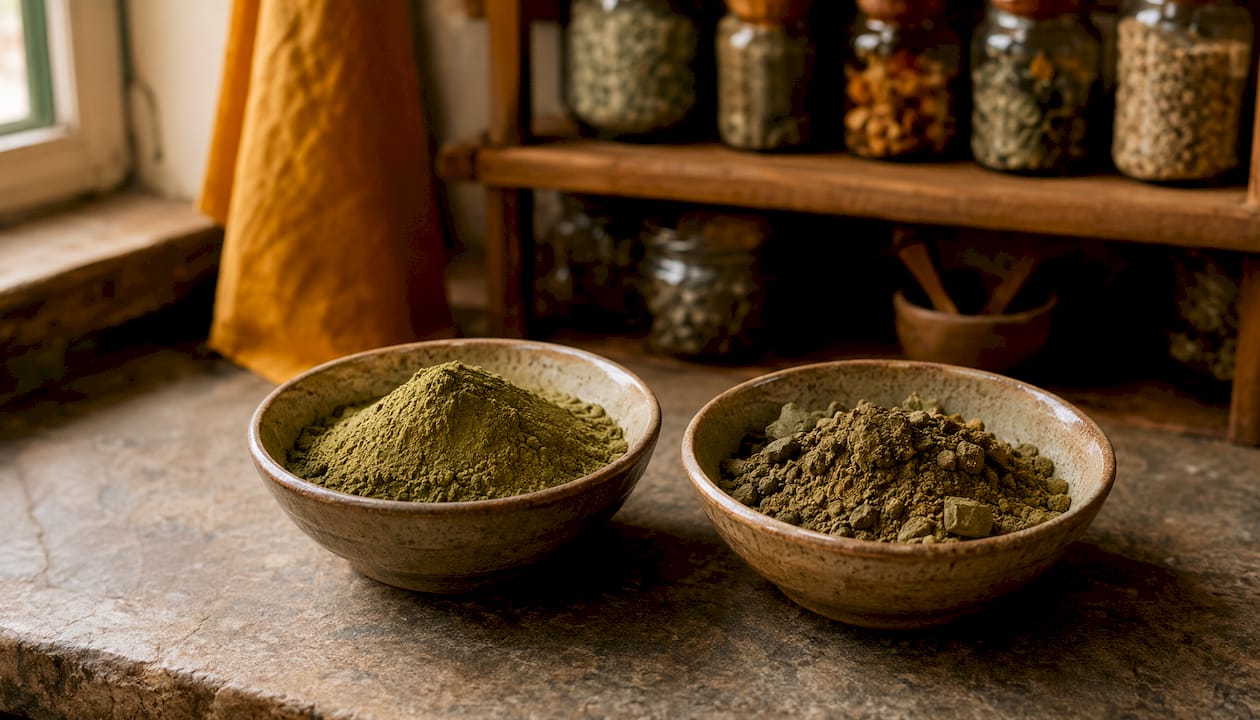
Color shift is the first visual cue. Expired henna turns dull gray or flat brown, losing the green undertone that signals active lawsone content. Smell is even more telling. A musty, sour, or fishy odor means microbial contamination has set in, and that batch should go straight in the trash. Clumping or a grainy texture points to moisture intrusion, even if the smell seems okay.
Signs your henna powder has gone bad:
Color: Dull gray or flat brown instead of greenish-brown
Smell: Musty, sour, or fishy odors
Texture: Hard clumps or gritty, uneven consistency
Stain test: Mixed paste produces only a faint orange tint after 24 hours
Pro Tip: Mix a small amount of powder into paste and apply it to the inside of your wrist. Leave it for at least an hour. Fresh, potent henna leaves a dark orange to brown stain. If the result is barely visible, the powder has lost too much lawsone to be worth using for a full application.
How to store henna powder so it lasts
Storage is where most people go wrong. Henna powder is a botanical product, not a shelf-stable cosmetic, and it needs to be treated accordingly.

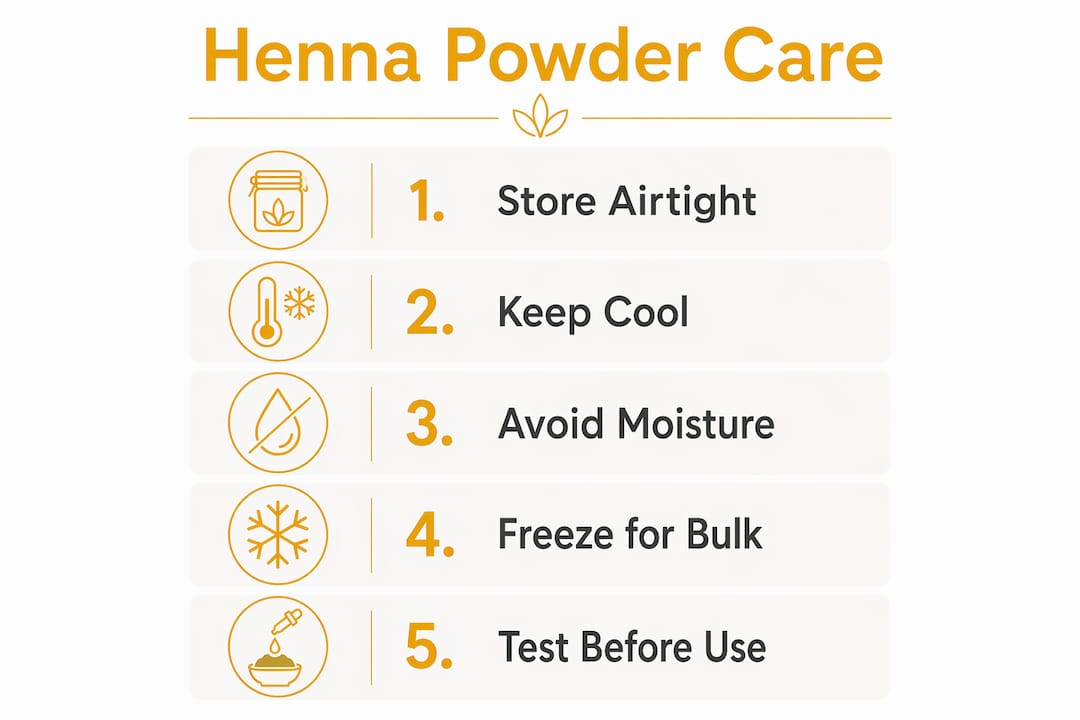
The single most important step is an airtight container. Oxygen drives oxidation, and every time you open a bag, you let more in. Glass jars with rubber-sealed lids or vacuum-sealed bags work well. Keep the container in a cool, dark place, away from the bathroom entirely. Bathrooms cycle through heat and humidity with every shower, which is exactly the environment that shortens henna’s life.
Labeling matters more than most people realize. Write the purchase date and the opening date directly on the container. Professional henna artists rotate their stock this way, using older batches first and replacing anything past its prime before it affects results.
Best storage practices at a glance:
Container: Airtight glass or vacuum-sealed bag
Location: Cool, dark cabinet or pantry, not the bathroom
Temperature: Below 25°C (77°F) consistently
Humidity: Keep it low; use silica gel packets inside the container if needed
Labeling: Mark purchase date and opening date on every container
Pro Tip: Vacuum sealing and freezing extend shelf life considerably. If you buy henna in bulk, divide it into small portions before freezing so you only thaw what you need. Repeated freeze-thaw cycles damage potency, so portion size matters.
Is it safe to use expired henna powder?
Expired henna powder is generally not toxic. The worst-case scenario with pure, natural henna that has simply aged is a weak or invisible stain. That’s frustrating, but it’s not a health risk.
The real danger comes from moisture. If henna powder has been exposed to humidity and developed mold or bacteria, the foul odor is your warning sign. Applying contaminated powder to skin, especially broken or sensitive skin, carries a genuine risk of irritation or infection. Discard any batch that smells off, regardless of how much is left.
A separate concern applies to commercial henna pastes with long shelf lives. Commercially shelf-stable pastes often contain synthetic additives that allow them to stain skin well past the natural seven-day window of pure henna. Those additives are frequently undisclosed on packaging and can cause skin sensitivity or allergic reactions. Natural henna paste loses stain ability within about a week without refrigeration or freezing, so unrefrigerated long-stored cones likely contain additives.
When to discard henna powder:
Musty, sour, or fishy smell
Visible mold or unusual discoloration
Clumps that don’t break apart easily
Stain test produces no visible color after a full hour
What U.S. henna professionals say about powder freshness
Experienced henna artists treat powder freshness as a non-negotiable part of their practice. Hennaforfun, which offers henna events and private lessons across the Pacific Northwest, emphasizes active storage management as a core part of working with quality henna. The goal is always to preserve lawsone content, because that’s what produces the rich, lasting stains clients expect.
Practitioners consistently flag two issues that catch beginners off guard. First, commercial pastes marketed as “natural” or “organic” often contain chemical stabilizers that compromise both purity and safety. The Wikipedia entry on henna notes that commercially packaged pastes able to stain skin beyond seven days without refrigeration contain other chemicals that may be harmful. Second, freeze-thaw management for paste is something most home users skip entirely, to their detriment.
Professional storage habits worth adopting:
Date every container at purchase and opening
Store powder in vacuum-sealed portions if buying in bulk
Freeze henna paste in individual-use portions and thaw only what you need
Never refreeze thawed paste; repeated cycles cause rapid color loss
Run a stain test after any storage period longer than a few months
Avoid any pre-made commercial cone that was not shipped frozen
For anyone working with henna during pregnancy, freshness and ingredient purity matter even more, as detailed in this guide on tattoo safety during pregnancy. Hennaforfun’s pregnancy henna services use only fresh, vetted henna, which is exactly the standard to hold any product to before applying it to sensitive skin.
Key Takeaways
Henna powder retains potency for 3 to 5 years if stored airtight, cool, and dry, based on ideal storage conditions, but heat, humidity, and air exposure can cut that window to under two years and leave you with a stain that barely shows.
Point | Details |
Shelf life under ideal storage | Henna powder retains potency for 3 to 5 years in airtight, cool, dry conditions. |
Degradation rate when stored poorly | Improperly stored henna loses potency significantly within a few years; heat above 28°C or humidity above 65% accelerates this decline. |
Key spoilage signs | Dull gray or brown color, musty or sour smell, and clumping all indicate the powder has gone bad. |
Safety of expired henna | Pure expired henna is not toxic but is ineffective; discard any batch with foul odors due to microbial contamination risk. |
Commercial paste warning | Shelf-stable pastes that stain beyond seven days without refrigeration likely contain synthetic additives that can cause skin reactions. |
Recommended
Comments