How Long to Leave Henna on Skin for Best Results
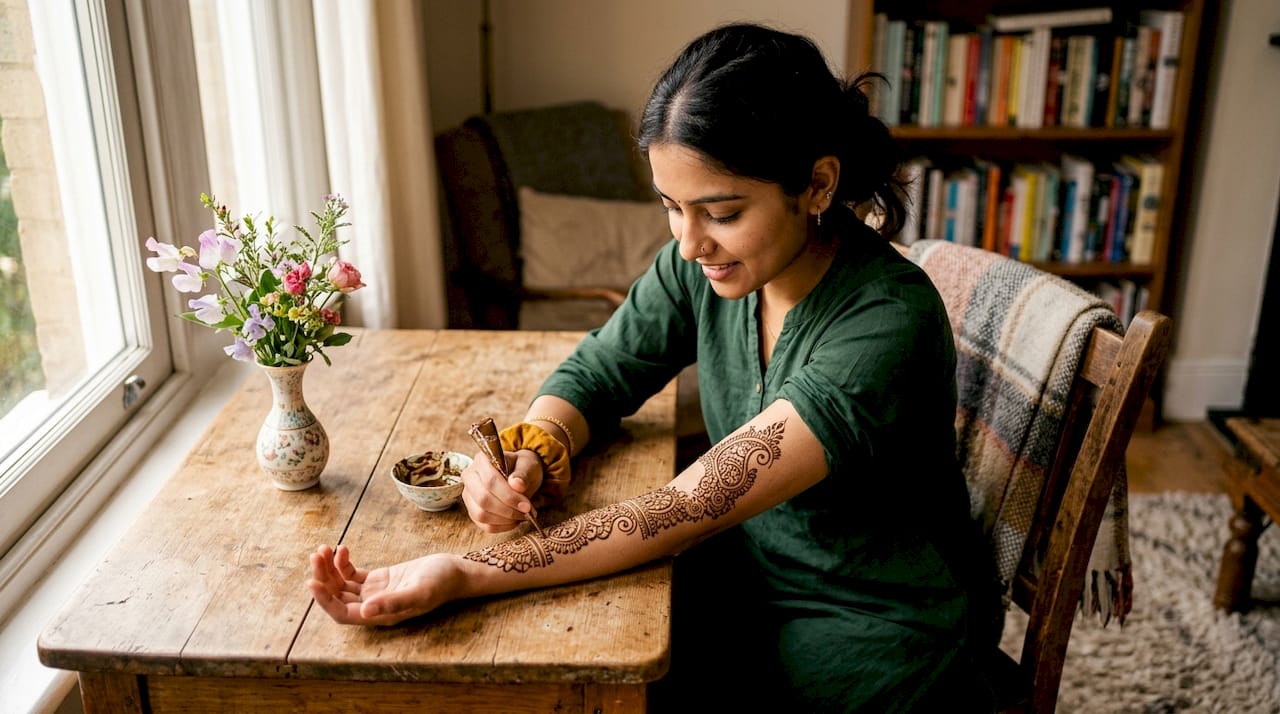
Leaving henna paste on your skin for at least 4–8 hours is the standard for a rich, deep stain. Shorter wear times produce pale orange results that fade within days. The active dye in henna, a molecule called lawsone, needs sustained contact with your skin to penetrate the outer keratin layers. Overnight wear, typically 8–12 hours, delivers the darkest, most durable color. Understanding the science behind this process, and following the right aftercare steps, is what separates a stunning stain from a disappointing one.
How long to leave henna on skin for a great stain
The henna staining process is chemical migration, not instant dyeing. When you apply henna paste, lawsone molecules begin moving from the paste into the upper layers of your skin’s epidermis. They bind to keratin, the structural protein in your skin cells. The longer the paste stays in contact with your skin, the deeper those molecules travel.
There are two distinct phases happening during wear time. The first is surface drying, which takes 15–30 minutes and is when the paste is most vulnerable to smudging. The second is dye migration, which continues for hours after the surface feels dry. This is the phase most people misunderstand. A paste that feels dry is not a paste that has finished staining.
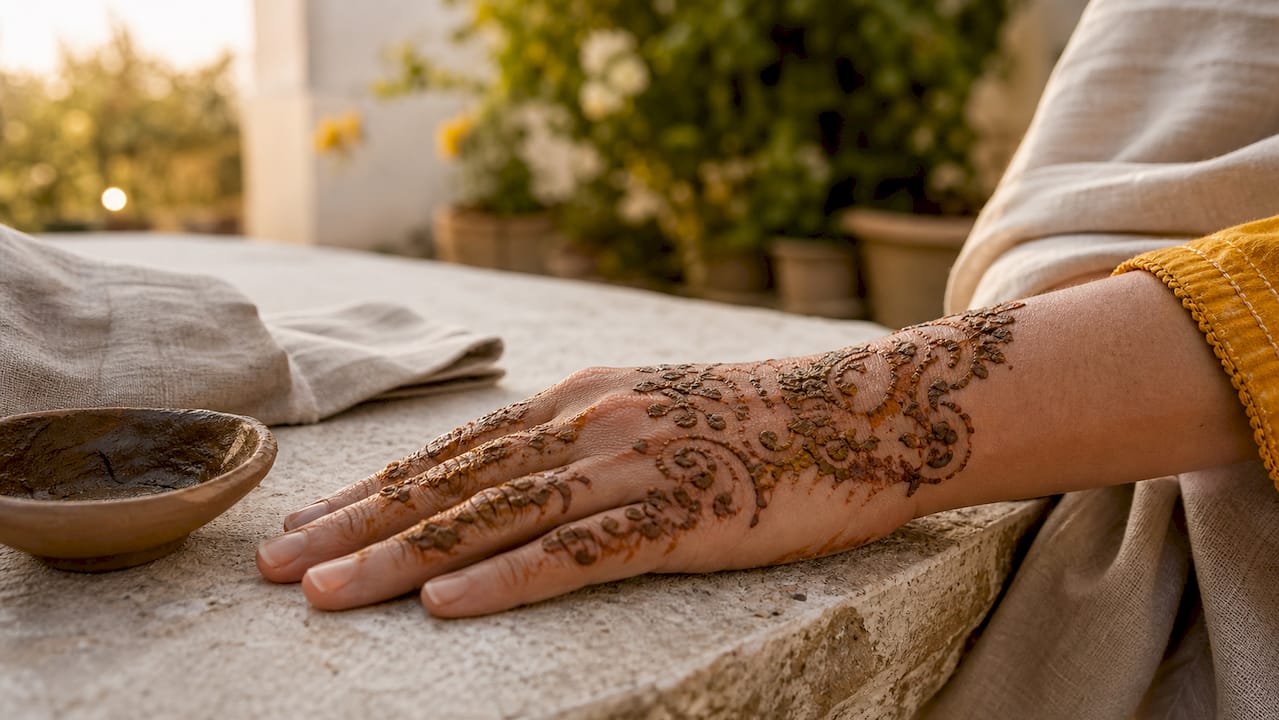
Skin type and temperature both influence how well lawsone penetrates. Warmer skin absorbs dye faster. Thicker skin on the palms and soles tends to produce the darkest stains because the keratin layer is denser and holds more dye. Thinner skin on the wrist or forearm produces lighter results, even with identical wear times.
Pro Tip: Gently warming your skin before application, such as sitting in a warm room or using a warm compress, can speed up dye migration and improve color depth.
After you remove the paste, oxidation takes over. The stain appears light orange at first. Over the next 24–48 hours, oxidation deepens the color to a rich brown or reddish brown. This means the final result is never visible immediately after removal.
What stain intensity can you expect at each wear time?
The relationship between wear time and stain darkness is direct and predictable. Leaving paste on for 2–4 hours produces a light, subtle stain. It works for casual occasions but fades quickly, often within a week. The 4–8 hour range is the standard for most people and delivers a medium to rich color that lasts noticeably longer. Wear times of 8–12 hours or overnight produce the deepest, most saturated results.
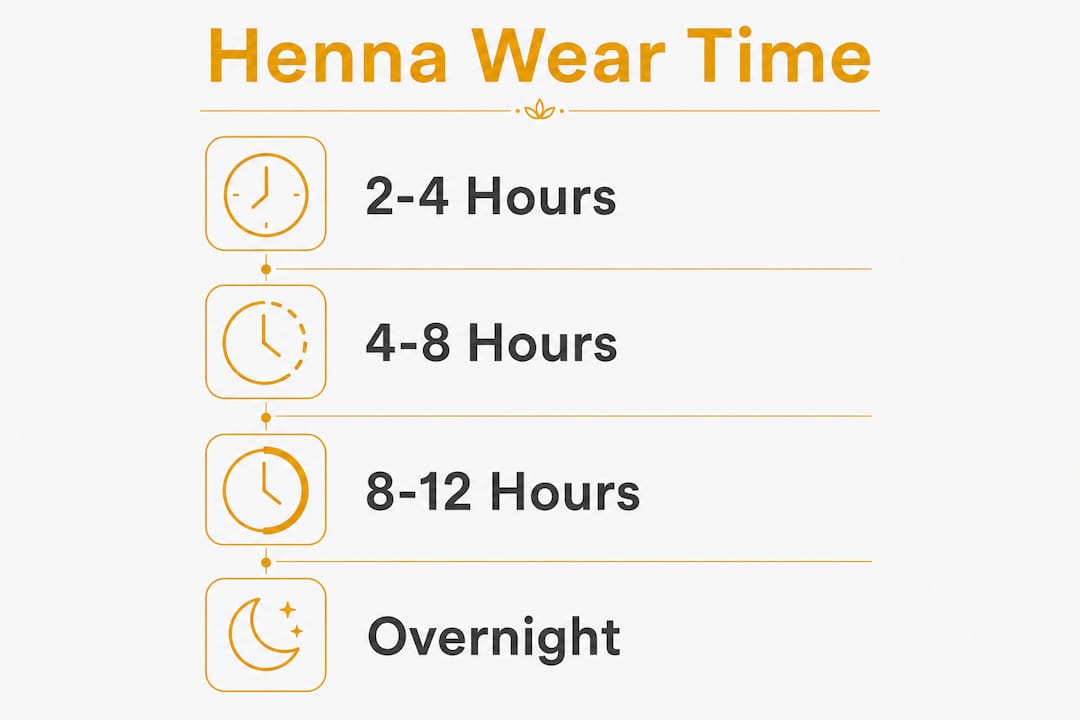
Wear Time | Stain Intensity | Expected Duration |
2–4 hours | Light, subtle orange | 5–7 days |
4–8 hours | Medium to rich brown | 1–2 weeks |
8–12 hours | Deep, dark brown | 2–3 weeks |
Overnight (12+ hours) | Maximum depth | Up to 3 weeks |
Removing paste too early, under 2 hours, is the most common beginner mistake. The result is a pale, uneven stain that fades within days. Many people blame the henna quality when the real issue is timing. Patience during this phase is the single biggest factor in your outcome.
Pro Tip: Apply henna in the evening and sleep with it wrapped loosely. Morning removal after 8–10 hours gives you maximum color without disrupting your day.
Body location matters as much as time. Palms, fingers, and the soles of feet produce the darkest stains because the skin is thicker. Wrists, forearms, and ankles produce medium results. Delicate areas like the face or chest produce lighter stains regardless of wear time.
What are the best practices for keeping henna paste on safely?
Skin preparation before application is not optional. Natural skin oils form a barrier that slows dye absorption. Washing with soap or using an astringent like witch hazel removes sebum and opens the path for deeper penetration. Dry your skin completely before applying paste.
Once the paste is on, protecting it during the wear period requires a few practical steps:
Avoid touching or pressing the design for the first 15–30 minutes while the surface dries.
Use medical tape or loose plastic wrap to protect the design during sleep or movement.
Avoid tight clothing over freshly applied henna.
Stay away from water, steam, and sweat during the wear period.
Keep the area warm. Cold slows dye migration significantly.
Using quality paste matters too. Hennaforfun’s handmade henna cones are made with natural ingredients that support consistent dye release during the full wear period. Low-quality paste with synthetic additives can dry out too fast, cutting the migration phase short.
Extended paste wear of up to 12 hours requires safe maintenance. Loose wrapping with breathable material keeps the paste moist without trapping heat uncomfortably. Never use airtight plastic wrap for extended periods, as it can cause skin irritation.
How to care for your stain after removing the paste
Aftercare is where most people lose color they worked hours to build. The stain is still developing after the paste comes off. Treating it carelessly in the first 24 hours can undo the work of a full overnight wear.
Follow these steps immediately after removing the paste:
Scrape the paste off gently with a dull edge. Do not use water to remove it.
Apply a small amount of natural oil, such as coconut oil or olive oil, to the stained area.
Avoid washing the area with soap or water for at least 12 hours after removal.
Keep the design away from friction, including tight clothing, towels, and repeated rubbing.
Reapply natural oil daily to keep the skin moisturized and slow surface shedding.
Avoid chlorinated pools and long soaks in water, which accelerate fading.
Henna tattoos last 1–3 weeks depending on body location and how much friction the area receives. High-friction areas like the hands fade within 1–2 weeks. Low-friction areas like the upper arm or shoulder can hold color for up to 3 weeks with proper care.
Proper aftercare, specifically avoiding water and using natural oils, is the most reliable way to extend stain life. The oxidation process that deepens your color continues for 24–48 hours post removal. Keeping the skin dry and protected during this window makes a visible difference in the final result.
Key Takeaways
Leaving henna paste on for 4–8 hours produces a rich stain, and overnight wear of 8–12 hours delivers the deepest, most durable color with proper aftercare extending results up to 3 weeks.
Point | Details |
Minimum wear time | Leave paste on for at least 4 hours to achieve a medium, lasting stain. |
Overnight for best results | 8–12 hours of wear produces the deepest color and longest-lasting stain. |
Drying vs. staining | Surface drying in 15–30 minutes does not mean staining is complete. |
Aftercare is critical | Avoid water for 12 hours post removal and apply natural oil daily to extend color. |
Skin prep matters | Clean skin free of oils absorbs dye more deeply and evenly. |
What I’ve learned from watching people rush the process
The most consistent pattern I see is people pulling the paste off the moment it feels dry. That 15–30 minute surface drying phase feels like progress, but it is just the beginning. The real staining happens in the hours that follow, quietly, beneath the surface.
I have watched people at Whenna Events get beautiful designs applied, then remove the paste an hour later because they were worried about smudging. The result is always the same: a pale, uneven stain that fades by the end of the week. Then they assume henna just does not work well on their skin. It does. They just did not give it time.
Skin variation is real, and it does affect results. But the gap between a 3-hour wear and an 8-hour wear is far more significant than any difference in skin type. I have seen people with “difficult” skin get stunning results simply by leaving the paste on overnight and following the aftercare steps correctly.
The other mistake I see constantly is washing the stain immediately after removal. People want to clean up the residue, which is understandable. But that first wash strips color that has not yet oxidized. Waiting even 12 hours makes a visible difference. If you can wait 24 hours, the color you get is noticeably richer.
Patience is not just good advice here. It is the actual mechanism. The chemistry of henna staining requires time, and no shortcut replaces it.
— Angana
Hennaforfun resources for your best henna results
Getting the timing right is only part of the equation. The quality of your paste and your application technique shape the final result just as much.

Hennaforfun offers private henna art lessons for anyone who wants to move beyond guesswork and learn proper application, timing, and aftercare from an experienced artist. For those who prefer to practice at home, the DIY henna kit includes everything needed for a quality application session. Each product is made with natural ingredients designed to support the full dye migration process. Whether you are preparing for a special occasion or building a new creative skill, Hennaforfun has the tools and expertise to help you get the most from every application.
FAQ
How long should henna sit on skin for a dark stain?
Leave henna paste on for at least 4–8 hours for a medium to rich stain. For the darkest results, wear it overnight for 8–12 hours.
What happens if you remove henna paste too early?
Removing paste under 2 hours produces a pale, short-lived orange stain. The dye molecules need extended contact time to penetrate the skin’s keratin layers fully.
Does henna stain look dark right after removing the paste?
No. The stain appears light orange immediately after removal and darkens over 24–48 hours through oxidation. The final color is not visible until at least a day after removal.
How long do henna tattoos last on skin?
Henna tattoos last 1–3 weeks depending on body location and friction. High-friction areas like the hands fade faster, while low-friction areas can hold color for up to 3 weeks with proper aftercare.
Can you leave henna on skin overnight safely?
Yes. Overnight wear of 8–12 hours is safe and produces the best results. Use loose wrapping with breathable material to protect the design and keep the paste from drying out completely.
Recommended
Comments