How to Store Henna Cones and Keep Them Fresh
Proper storage of henna cones is the single most important factor in maintaining dye strength and paste usability over time. Henna paste behaves like perishable food. Expose it to heat, air, or repeated temperature swings, and the lawsone molecule responsible for staining breaks down fast. The good news is that two methods, refrigeration and freezing, reliably preserve fresh cones for days to months. Hennaforfun recommends both approaches depending on how soon you plan to use your cones. Get storage right, and every application delivers the deep, rich stain your designs deserve.
How to store henna cones: what you need before you start
The right environment and tools make the difference between paste that stains beautifully and paste that disappoints. Before you store a single cone, gather the correct supplies and understand the temperature ranges that keep henna stable.
Storage environments and temperature ranges
Henna paste needs consistent cold to stay potent. Two environments work:
Refrigerator (32°F–40°F): Best for cones you plan to use within 3–7 days. Keep cones away from the door, where temperatures fluctuate most.
Freezer (0°F or below): Best for longer storage. Artisan henna cones stay stable for 3–6 months when frozen properly. That is a significant window for artists who batch-prepare their paste.
Tools and materials you need
Item | Purpose | Notes |
Ziplock freezer bags | Airtight barrier against moisture | Use double-bagging for extra protection |
Airtight glass or plastic jars | Secondary container for fridge storage | Opaque containers block light degradation |
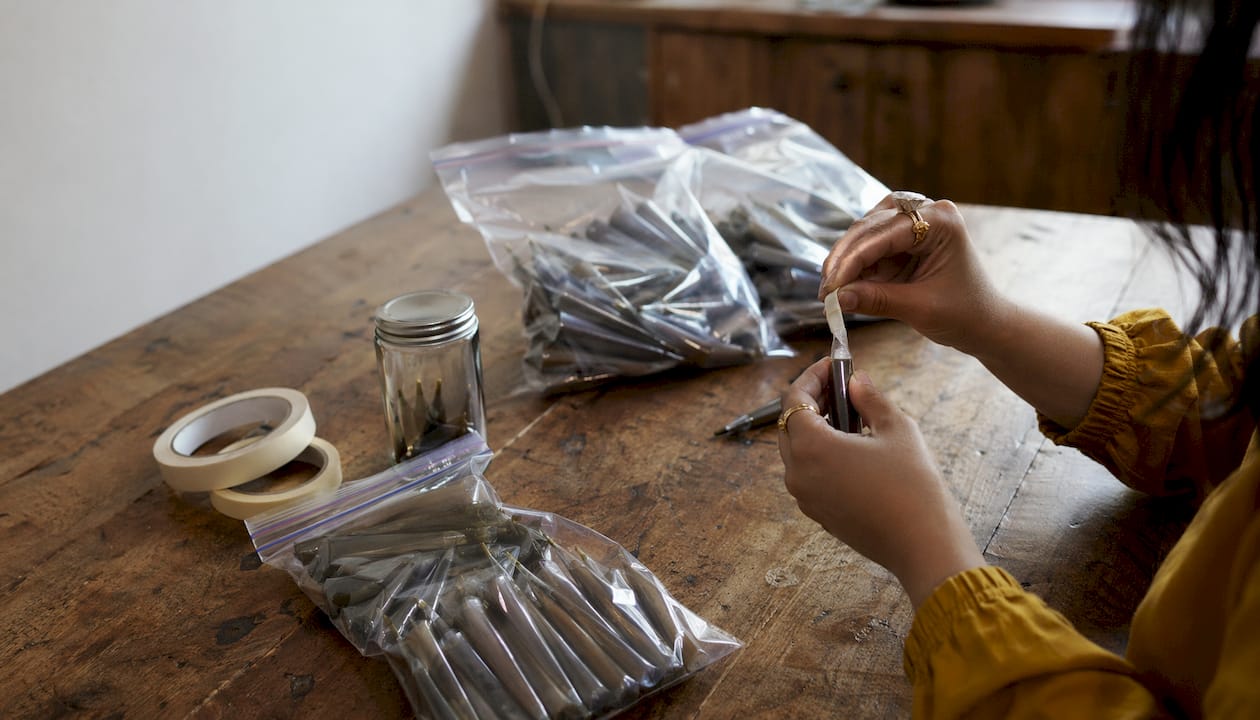
Permanent marker and labels | Date and batch tracking | Write preparation date, not purchase date |
Small portion bags or cones | Pre-portioned freezer units | Reduces thaw cycles per session |
Cooler with ice packs | On-site event storage | Keeps cones cold during outdoor work |
Opaque containers matter because light exposure accelerates oxidation of the essential oils that carry dye. A clear bag left on a sunny counter can degrade paste in hours. Always store in a dark, cool spot when refrigerating.
Pro Tip: Divide your paste into single-session portions before freezing. Portioning into smaller airtight containers reduces moisture intrusion and means you only thaw what you need, protecting the rest.
How do you store unopened henna cones for maximum shelf life?
Unopened cones give you the most flexibility. The paste inside has not been exposed to air, so your storage window is at its widest. Follow these steps to get the most out of every cone.
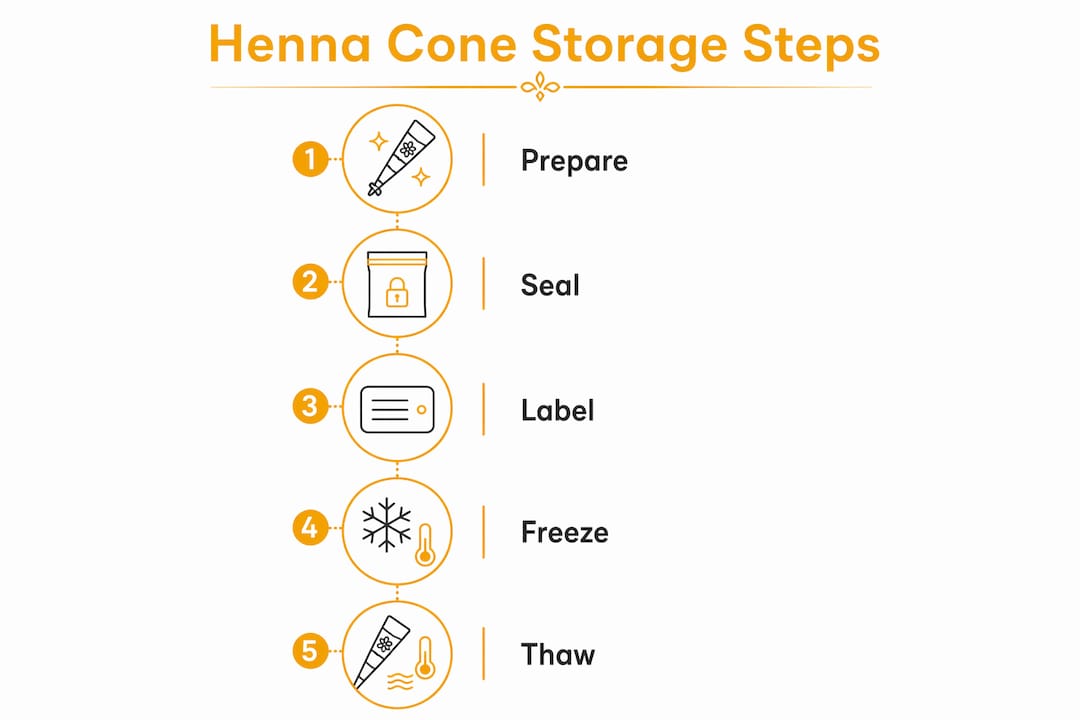
Label immediately. Write the preparation date on each cone as soon as you receive or make them. Date of preparation, not arrival, tells you the true age of the paste.
Decide on your timeline. If you plan to use the cones within 3–7 days, place them in the refrigerator in an airtight bag. Refrigeration works well for short-term use and keeps paste ready without any thawing step.
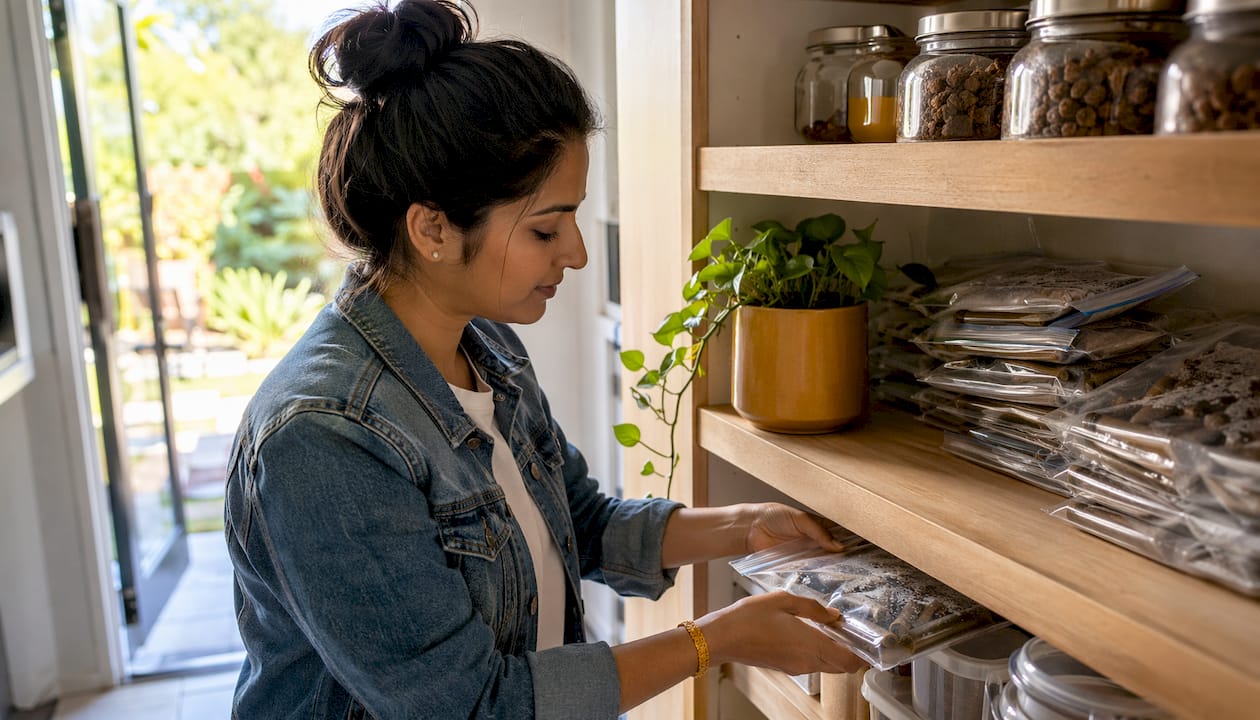
Freeze for longer storage. For anything beyond a week, freeze the cones. Lay them flat in a ziplock freezer bag, press out excess air, and seal tightly. Double-bag if your freezer tends to collect frost.
Keep cones away from direct sunlight. Even a few hours of sun exposure through a window can warm paste enough to start dye degradation. Store in a drawer or opaque bag inside the fridge.
Thaw gradually before use. Move frozen cones to the refrigerator the night before your session, or thaw at room temperature for 1–2 hours before use. Never microwave or run under hot water. Rapid heat destroys the lawsone molecule.
Use thawed cones the same day. Once a cone reaches room temperature, treat it as an opened cone. Refreeze only if the paste was never exposed to air and the cone was not squeezed.
Pro Tip: Freeze cones in groups that match your typical session size. If you use three cones per event, bag them in sets of three. You pull one bag, thaw it, and the rest stay untouched.
What are the best practices for storing opened henna cones?
Once you break the seal on a cone, the clock starts ticking. Air reaches the paste, oxidation begins, and the essential oils that activate dye release start to evaporate. Opened cones require more attention than sealed ones, but they are easy to manage with a few firm habits.
Refrigerate immediately after use. Place the open cone tip-down in an airtight bag and seal it. Opened cones stay usable for 3–7 days when refrigerated correctly.
Cover the tip between applications. Fold the tip over or use a small piece of tape to block airflow. Even a few minutes of open-air exposure thickens the paste at the tip and can cause clogs.
Watch for smell changes. A stale or dusty odor signals oxidation. Aroma is a reliable indicator of paste quality. Fresh henna smells earthy and slightly herbal. If that smell is gone, dye strength has likely dropped.
Transfer paste if the cone is damaged. If a cone tears or leaks, move the paste into a pre-rolled empty cone right away. Leaving paste in a compromised cone exposes it to air and wastes your supply.
Keep cones cold at outdoor events. Heat at summer events quickly reduces dye strength. Use a cooler with ice packs to keep cones at a stable temperature between applications.
Common mistakes that degrade stain quality:
Leaving cones at room temperature for hours between clients is the most damaging habit. Squeezing paste back into the cone after it has been exposed to air introduces contaminants. Storing opened cones in the freezer without sealing them tightly causes freezer burn and paste separation. Avoid all three.
Pro Tip: At events, keep only one or two cones out at a time. Store the rest frozen and pull fresh cones as needed. This limits total air exposure across your entire supply.
How do you troubleshoot common henna cone storage problems?
Even careful artists run into storage issues. Knowing what to look for and how to respond saves paste and prevents weak stains on clients.
Signs your paste has gone bad
Smell is the first signal. A stale or dusty scent means oxidation has already reduced dye potential. Texture is the second signal. Paste that has separated into watery and thick layers, or that has dried into a crumbly consistency, will not flow properly through the cone tip.
Common problems and solutions
Problem | Likely Cause | Solution |
Weak or patchy stain | Oxidation or old paste | Check smell and date; discard if stale |
Paste too thick to flow | Drying from air exposure | Add one drop of essential oil and knead gently |
Watery separation in cone | Repeated freeze-thaw cycles | Knead to recombine; use immediately |
Freezer burn on paste | Inadequate sealing | Double-bag before freezing |
Paste smells sour or off | Bacterial growth | Discard immediately; do not use on skin |
Repeated freeze-thaw cycles damage henna paste by allowing moisture condensation and temperature shock that degrade the lawsone molecule. Each unnecessary thaw shortens the life of your paste. Thaw only what you will use in a single session.
Temperature fluctuations are the hidden enemy. A freezer that cycles between 0°F and 20°F repeatedly is worse than a steady refrigerator. If your freezer runs warm or cycles frequently, use the refrigerator for cones you plan to use within the week and reserve the freezer only for cones with a stable, consistent cold environment.
How do you organize and manage your henna cone inventory?
Good inventory habits prevent waste and keep your supply rotation smooth. Artists who manage their cones well never reach for a cone only to find it has expired or degraded.
Label every cone by date and batch. Write the preparation date directly on the cone or on the bag. Include the batch number if you make paste in multiple rounds. This takes ten seconds and saves hours of guesswork later.
Use a first-in, first-out system. Labeling and FIFO rotation are critical for preventing use of expired or degraded paste. Place new cones at the back of the freezer and pull from the front.
Portion cones by session size. Group cones into bags that match your typical usage. A solo artist doing small events might bag two cones per session. A busy studio might bag five. Matching portions to usage means you thaw exactly what you need.
Keep a count of cones on hand. A simple sticky note on the freezer door with a running count prevents over-ordering and under-preparation. Update it every time you add or remove cones.
Stock pre-rolled empty cones as backup. Having empty cones ready lets you transfer paste quickly if a cone tears or clogs during an event. Transferring paste into empty cones during live work maintains uninterrupted workflow and limits paste exposure.
Rotate between freezer and fridge strategically. Move a small batch from the freezer to the fridge two days before a scheduled event. This gives paste time to thaw gradually without any rush.
Key Takeaways
Freezing is the most reliable method to preserve henna cone freshness, and pairing it with proper portioning, labeling, and gradual thawing protects dye strength from the moment you store a cone to the moment you use it.
Point | Details |
Freeze for long-term storage | Frozen henna cones stay stable for 3–6 months when sealed airtight. |
Refrigerate for short-term use | Cones used within 3–7 days stay fresh and ready in the refrigerator. |
Portion before freezing | Dividing paste into single-session amounts prevents repeated thaw cycles. |
Label every cone by date | First-in, first-out rotation prevents use of expired or degraded paste. |
Watch for smell and texture changes | A stale odor or separated texture signals oxidation and reduced dye strength. |
What I have learned from years of storing henna cones
By Angana
The advice I give every new artist is simple: treat your henna cones the way you treat fresh herbs. You would not leave basil on the counter for a week and expect it to be vibrant. Henna is the same.
Freezing changed my workflow completely. I now batch-prepare cones, portion them into groups of three, and freeze everything I will not use within two days. The difference in stain quality between a well-frozen cone and one that sat in the fridge for five days is visible. Clients notice.
The mistake I see most often at events is artists leaving their entire supply out on the table. Heat and air work fast. I keep one cone in my hand and the rest in a small cooler beside me. At outdoor summer events, that cooler is non-negotiable.
One more thing: always carry pre-rolled empty cones to every event. Cones tear. Tips clog. Having empties on hand means you transfer paste in thirty seconds and keep working. I learned that lesson the hard way at a winery event where a cone split mid-design. Never again.
— Angana
Hennaforfun supplies and lessons to support your henna practice
Knowing how to store henna cones is only part of the picture. Having quality cones worth storing is the other half.

Hennaforfun offers handmade henna cones crafted for consistent dye release and smooth flow, so every cone you freeze is worth preserving. For artists who want to build real skill alongside their supply knowledge, private henna lessons in the Kirkland, Bellevue, and Snohomish areas cover everything from cone technique to design execution. Whether you are a beginner learning the basics or an enthusiast refining your craft, Hennaforfun’s hands-on instruction gives you the foundation to work confidently with every cone you open.
FAQ
How long do henna cones last in the freezer?
Natural artisan henna cones stored in a freezer remain stable for 3–6 months when sealed in airtight bags. Thaw only what you need for each session to protect the rest.
Does henna need to be refrigerated?
Yes. Henna paste is highly perishable and degrades quickly at room temperature, especially in warm climates. Refrigerate cones you plan to use within 3–7 days, and freeze anything beyond that window.
How do you store an open henna cone?
Seal the tip, place the cone in an airtight bag, and refrigerate immediately. Opened cones stay usable for 3–7 days when kept cold and protected from air exposure.
How do you know if a henna cone has gone bad?
A stale or dusty smell is the clearest sign. Aroma signals oxidation and loss of dye potential even when the paste looks normal. Discard any cone with a sour or off smell.
Can you refreeze a henna cone after thawing?
Refreezing is possible only if the cone was never opened and the paste was not exposed to air. Repeated freeze-thaw cycles degrade the lawsone molecule and reduce stain strength, so portion cones before freezing to avoid this situation.
Recommended
Comments