Henna Party Decoration Ideas for an Immersive 2026 Event
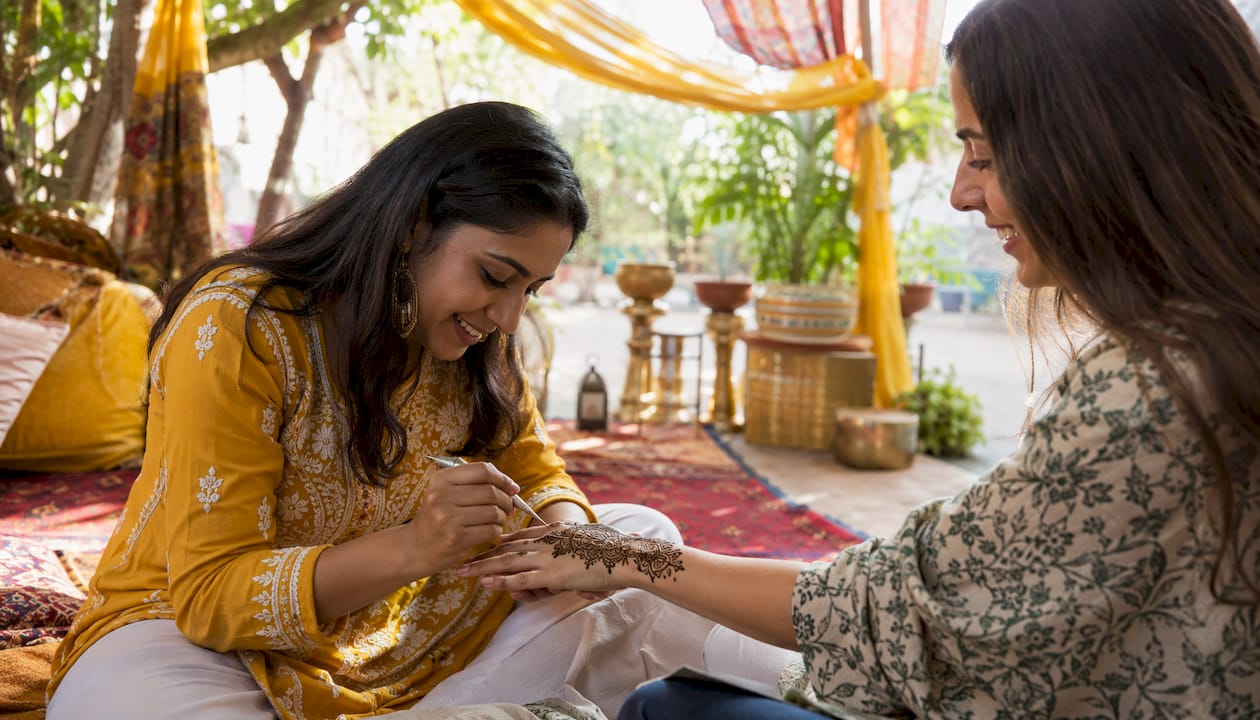
The five moves that make a henna party feel genuinely immersive: a unified color story, a dedicated 4×5 ft application and hand-photo zone, shadow-free task lighting paired with warm ambient light, comfortable seating arranged for guest flow, and at least one interactive station. Get those five right and everything else is detail. For a turnkey setup, Hennaforfun handles the artist, the supplies, and the experience. Prefer to host it yourself? Their DIY Henna Kit and stencils give you a solid starting point without hiring anyone.
Your immediate checklist: confirm your artist or kit order, reserve the photo zone, plan your lighting, and prioritize sustainable materials over single-use plastics. The rest of this guide walks through each piece in detail.
Table of Contents
What should you check before buying any henna party decorations?
What interactive stations keep guests engaged throughout the event?
What does a henna party typically cost, and how should you schedule it?
What decoration ideas work for Moroccan, Indian, and Middle Eastern themes?
What table settings and centerpieces complement a henna theme?
What music and ambiance set the right mood for a henna party?
Hennaforfun makes the full-service henna party straightforward
What should you check before buying any henna party decorations?
A few logistics answered early will save you from buying the wrong props or booking the wrong service.
Guest count and venue type. Indoor venues give you lighting control; outdoor setups need a weather backup and a shaded spot for the artist.
Service model. A pro artist handles 4–8 guests per hour on detailed designs. A DIY stencil station moves faster, roughly 5–10 minutes per guest, but needs a facilitator. A group lesson format works best when learning is the point.
Lead time. Book your artist and rent larger props 4–6 weeks out. Order DIY kits, stencils, and small decor 2 weeks out.
Power access. Confirm outlets near the application zone for ring lights and small fans.
Budget checkpoints. Separate your artist fee from your decor budget early so one doesn’t cannibalize the other.
Pro Tip: Send your confirmed artist a short checklist before the event: table dimensions, two chairs, a small waste bin, and a rinse station. Artists who arrive to find these ready start on time.
How do you build a cohesive theme and color story?
Pick one unifying story — a color palette, a texture, and a single cultural or modern reference — and carry it across every element. That’s the whole strategy. When the backdrop, cushions, table runner, invitation, and prop finishes all speak the same visual language, the event feels designed rather than assembled.
The most successful henna parties in 2026 trend toward immersive design: one cohesive story across all decor elements rather than a collection of separate props. For materials, favor reusable fabrics, potted plants, dried flower arrangements, and rented wooden props. Eco-friendly choices like fabric banners, cloth buntings, and dried florals photograph beautifully and avoid the landfill problem of single-use glitter and plastic.
Four themes that translate well to U.S. home and venue events:
Rajasthani haveli: deep jewel tones, embroidered textiles, brass lanterns, marigold garlands
Modern boho: terracotta and sage, macramé backdrops, pampas grass, linen runners
Floral minimalist: white and blush, single-variety blooms, clean wooden surfaces
Tropical fiesta: mango orange, fuchsia, palm leaves, rattan accents
“Every element should tell the same story. When the invitation matches the backdrop and the backdrop matches the hand-photo surface, guests feel like they walked into something intentional — not just a party with decorations.” — Design principle from 2026 immersive event planning
Pro Tip: Build your palette around the hand-photo table first. Every guest photo will be taken there, so that surface sets the visual tone for every image that gets shared.
How should you set up the henna application and photo zone?
The application zone is the functional heart of the event. A dedicated space of roughly 4×5 ft — used dozens of times per event — should integrate with your theme so every photo taken there looks intentional, not incidental.
Zone element | Recommendation |
Artist workspace | Small table, comfortable chair, supplies within arm’s reach |
Guest seating | Padded chair directly across, armrest-free for hand access |
Drying area | Two chairs set slightly aside with small fans |
Props basket | Dupattas, flower crowns, frames — within guest reach |
Clearance | 24 inches on each side for foot traffic |
For lighting, use a bright LED ring light or panel light directly at the application table. Task lighting must be shadow-free for precise work; a dim overhead spot is the single most common setup mistake. Add warm string lights or lantern clusters around the perimeter for mood. A canopy of string lights or lantern clusters changes how the entire space photographs, especially for evening events.
Supplies to have on the table: henna cones, disinfectant wipes, tissues, spare cones, a small drying fan, and disposable paper underlayers. Stock extras — running out mid-event stalls the whole flow.
Pro Tip: Place an embroidered cloth or brass tray on the hand-photo surface. A standardized photo surface shortens posing time and keeps the artist’s workflow steady — it’s one of the most consistent insider setups used at professional events.
What interactive stations keep guests engaged throughout the event?
Choose 2–3 station types that match your guest count and flow. More than three and the event feels scattered; fewer than two and guests without a henna appointment have nothing to do.
Live artist station is the anchor. One professional handles detailed designs; expect 4–8 guests per hour depending on design complexity. This is where Hennaforfun’s event artists shine, particularly at Whenna Events held at wineries and private homes.
DIY stencil station works well alongside the live artist. Stock it with DIY henna stencils, pre-filled cones, and a one-page instruction card. One facilitator can manage 6–8 guests at a time, with each guest spending roughly 5–10 minutes. It’s also the right choice for kids or guests who want to try application themselves.
Hand-photo booth needs only a ring light, a styled surface, and a props basket. Guests rotate through after their henna dries, so it naturally absorbs the drying wait.
“The DIY station isn’t a budget compromise — it’s a different kind of engagement. Guests who apply their own design remember the party differently than guests who just received one.” — Practical note from interactive event design
For a 20-guest event, one professional artist plus one DIY stencil station covers the room without anyone waiting more than 15 minutes. Add a second artist for 30+ guests.
Pro Tip: Sequence stations so the live artist handles the first guests while others start at the DIY table. By the time early guests are drying, the artist’s queue has moved through.
How do you create photo moments and meaningful keepsakes?
Design two dedicated photo moments: the integrated hand-photo station at the application zone and a theme-matched backdrop for full-body or group shots. Both need to be styled before guests arrive.
For the hand station, a ring light plus an embroidered cloth or brass tray surface produces the most-shared close-up images. Keep the props basket nearby: dupattas, floral crowns, and small frames give guests something to hold without overthinking the pose.
“The photos guests share after the event are the ones taken at a surface that was clearly set up for them. A styled hand-photo station communicates that someone thought about their experience.” — Photography-forward event design principle
Keepsake ideas that work without a large budget: seed paper favors printed with the event date, small potted succulents, or a printed card with the guest’s hand photo taken at the station. A disposable camera station adds an analog, tactile element that digital-native guests genuinely enjoy.
Pro Tip: Text guests a simple photo instruction card with their invite: “rest your hand palm-up on the tray, fingers relaxed.” It cuts posing time in half and produces more consistent images.
What does a henna party typically cost, and how should you schedule it?
Costs vary by artist experience, travel, guest count, and whether you rent props. A professional artist for a 2–3 hour private event generally runs in the range of $150–$400 depending on location and design complexity, though rates vary widely. DIY kit setups cost significantly less upfront but require a facilitator’s time.
Sample timeline for a 2.5-hour event (15–20 guests):
0:00–0:20 — Guest arrival, welcome drinks, ambient music
0:20–1:30 — Peak application window, artist at station, DIY table open
1:30–2:00 — Drying window, hand-photo booth open, food and mingling
2:00–2:30 — Group photos, favors distributed, wrap
For staffing, one artist handles up to 8 detailed designs per hour. Add a second artist or a DIY facilitator once your guest list passes 20. Budget 5–10 minutes per guest at a DIY stencil station and 8–15 minutes per guest for professional detailed work.
What safety basics should every henna host know?
Use pure, plant-based henna and avoid any product marketed as “black henna.” Black henna typically contains PPD (paraphenylenediamine), a chemical that can cause severe allergic reactions, chemical burns, and permanent scarring. Patch testing is recommended 24–48 hours before wide application for anyone with sensitive skin or unknown henna history.
“Black henna is not henna. PPD-based products carry real chemical burn risk and have caused permanent scarring. If a product promises a black stain, it is not natural henna — walk away.” — Safety standard for henna events
For patch testing: apply a small amount to the inner wrist or behind the ear, leave for 30 minutes, then rinse. Watch for redness, itching, or swelling over the next 24 hours. No reaction means the guest is likely safe for full application.
For pregnancy henna, natural plant-based henna applied to the belly for maternity photos is widely practiced and generally considered safe when the product is pure. Hennaforfun offers a dedicated pregnancy henna service for maternity photoshoots and baby showers. Always confirm the henna is 100% natural with no additives.
Event safety checklist: note allergy disclosures on the henna party invitation, use single-use application tips, keep the workspace clean, and have a first-aid kit accessible.
Pro Tip: Add one line to your invite: “Natural henna will be used. Please notify us of any skin sensitivities.” It sets expectations and reduces liability before the event starts.
How do you choose the right artist or DIY option?
Prioritize event experience, photo references from recent work, documented sanitation practices, and clear scheduling estimates. An artist who has done private parties knows how to manage guest flow; one who primarily does bridal work may underestimate the pace a party requires.
Questions to ask before booking:
How many guests can you serve in two hours?
What supplies do you bring, and what does the host need to provide?
What is your patch-test policy for events?
What are your travel and setup requirements?
What is your cancellation policy?
Red flags: no photos of recent event work, any suggestion to use black henna, vague answers about timing, or no clear sanitation protocol. For DIY, the same logic applies: confirm the kit contains natural henna paste, not a synthetic substitute.
Balancing budget and experience: a professional artist costs more but handles guest flow, supplies, and design quality without host management. A DIY station with Hennaforfun’s kits costs less and works well for smaller, casual gatherings where the hands-on experience is the point.
What decoration ideas work for Moroccan, Indian, and Middle Eastern themes?
Cultural themes give a henna party its strongest visual identity. Each tradition brings a distinct material vocabulary.
Moroccan: Gold or brass lanterns in varying heights, star-cut patterns, deep jewel tones (cobalt, emerald, burgundy), zellige-inspired tile-print table runners, and low cushioned seating. Candles inside lanterns create the warm, flickering light that defines the aesthetic.
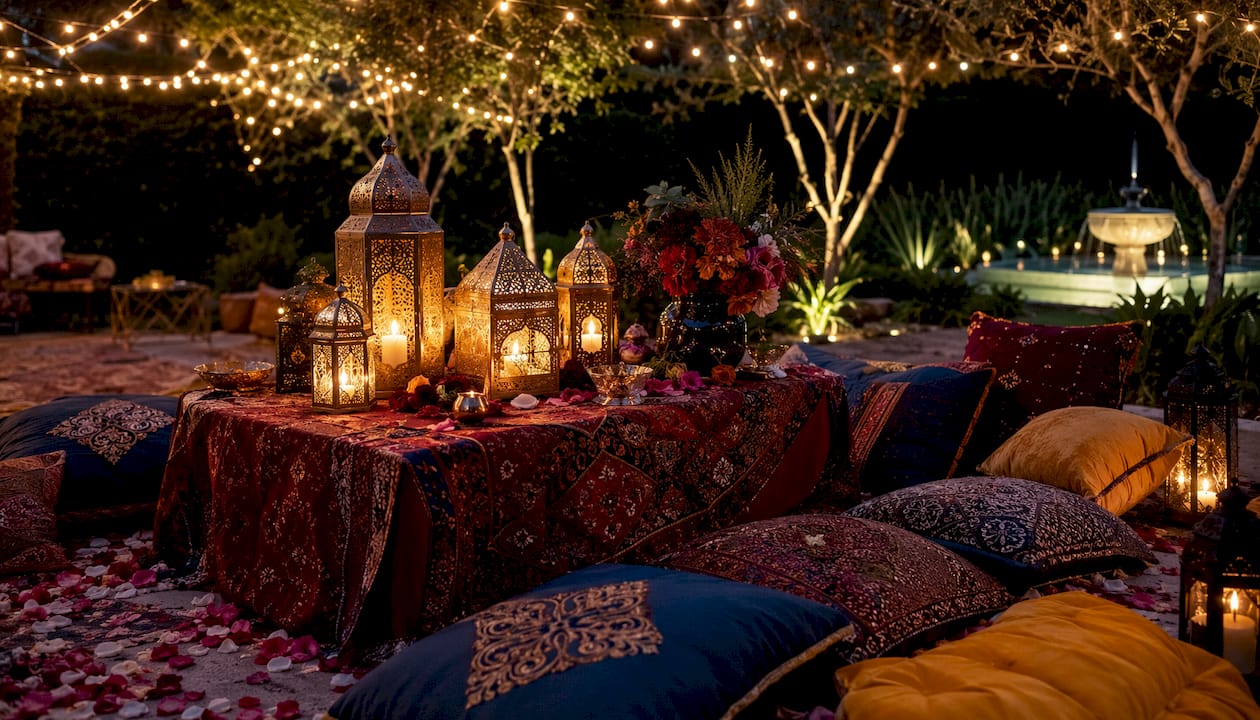
Indian (Rajasthani/Mughal): Marigold garlands, embroidered textiles, mirror-work cushions, brass urns with fresh flowers, and a backdrop of layered orange and fuchsia chiffon. This palette photographs exceptionally well under warm string lights. Modern South Asian gatherings in the U.S. often layer these traditional elements with cleaner, contemporary lines for a cross-cultural feel.
Middle Eastern / Palestinian: Geometric patterns in gold and white, olive branches, ceramic vessels, embroidered tablecloths (tatreez-inspired), and rose water in small glass bottles as both decor and favor. Palestinian henna party decor often centers on the embroidery motif carried from the invitation through to the table setting.
Turkish: Layered fabric backdrops in jewel tones, ornate embroidered curtains, and gold-accented accessories. A 10×10 ft embroidered arch backdrop transforms a plain wall into a ceremony focal point.
What table settings and centerpieces complement a henna theme?
The table is where guests sit during application and where food is served, so it does double duty as decor and function.
For a Moroccan or Middle Eastern theme, start with a deep-colored tablecloth (cobalt, burgundy, or forest green), add a cluster of brass lanterns in three heights at the center, and scatter marigold petals or small blooms around the base. Gold charger plates and jewel-toned napkins complete the place setting without requiring florals.
For a modern boho table, a linen runner in terracotta or sage over a raw wood table, with a low centerpiece of dried pampas grass and eucalyptus in a terracotta vessel, keeps the look organic and easy to assemble. Add pillar candles in varying heights for depth.
For a floral minimalist setup, a single-variety bloom in a bud vase at each place setting outperforms an elaborate centerpiece. White ranunculus or blush garden roses against a clean white tablecloth photograph cleanly and don’t compete with the henna designs in guest photos.
One practical rule: keep centerpieces low enough that guests can see each other across the table. Tall arrangements block conversation and make the application zone feel crowded.
What music and ambiance set the right mood for a henna party?
Music does more atmospheric work than most decor elements, and it costs nothing to plan well. The right playlist shifts the room from “party with activities” to “immersive experience.”
For a South Asian or Middle Eastern theme, a curated mix of Bollywood classics, contemporary Punjabi pop, and Arabic lounge music works across generations. Keep the volume low enough that the artist can speak with guests without raising their voice — application requires some conversation.
For a modern boho or floral minimalist theme, acoustic indie, soft world music, or lo-fi instrumental sets a calmer, more meditative tone that suits the focused nature of henna application.
Ambient sound layering: start with background music at arrival, bring the energy up slightly during the peak application window when the room is full, then ease back during the drying and photo phase. Incense or a diffuser with oud, sandalwood, or rose adds a sensory layer that guests notice without being able to name exactly why the room feels special.
Lighting and music together determine the room’s emotional register more than any prop. Get both right and the decor becomes context rather than the main event.
How should you write and send henna party invitations?
The henna party invitation sets the tone before guests arrive, so it should reflect the event’s visual theme and communicate the practical details clearly.
Digital invitations with henna-inspired motifs work well for casual gatherings and are easy to share via text or email. Platforms like Canva offer editable templates with mehndi-style borders that can be customized with your color palette. For a more formal event, a printed card with an embossed or foil-printed henna motif signals the occasion’s significance.
What to include beyond the basics: a note that natural henna will be used (with a prompt to flag skin sensitivities), a dress code suggestion if the theme calls for it, and a brief line about what to expect (live artist, DIY station, food, photos). Guests who know what’s coming arrive more relaxed and engage more fully.
For outfit guidance, suggest light, loose sleeves that roll up easily for arm application, and colors that complement the event palette for photos. A short “what to wear” note on the invite prevents the awkward moment of a guest in a tight long-sleeve who can’t participate comfortably.
Key Takeaways
A henna party works when the application zone, lighting, and theme all tell the same story — everything else supports those three anchors.
Point | Details |
Dedicate a 4×5 ft zone | Reserve a roughly 4×5 ft space for application and hand photos; style it to match your theme. |
Layer your lighting | Use a shadow-free LED ring light at the artist station and warm string lights or lanterns for ambient mood. |
Pick one cohesive theme | Choose a color story and carry it across backdrop, table, invitation, and props for a designed look. |
Plan 2–3 interactive stations | A live artist station plus a DIY stencil table covers most guest counts without anyone waiting too long. |
Hennaforfun for turnkey events | Hennaforfun provides professional event artists, DIY kits, stencils, and private lessons across the Seattle area. |
What hosts consistently get right — and what most miss
The hosts who run the smoothest henna events share one habit: they treat the application zone as the room’s anchor, not an afterthought. Every other decor decision radiates outward from that one surface. When the lighting is wrong there, no amount of beautiful backdrop fixes the photos. When the seating is awkward, the artist’s pace slows and the whole guest flow backs up.
What most planning guides miss is that the hand-photo surface is more important than the backdrop. Guests photograph their hands dozens of times. The backdrop gets one group shot. Spend your prop budget accordingly.
Hennaforfun runs Whenna Events at wineries, private homes, and similar venues across the Seattle area, and the pattern holds every time: the events that feel most memorable are the ones where someone thought carefully about where the artist sits and what the light looks like at that exact spot. Private lessons are also available in Kirkland, Bellevue, and Snohomish for hosts who want to develop their own skills before the event.
Hennaforfun makes the full-service henna party straightforward
Hosting a henna party from scratch means sourcing an artist, supplies, props, and a plan simultaneously. Hennaforfun handles the artist and supplies end of that equation, so you focus on the guest experience.
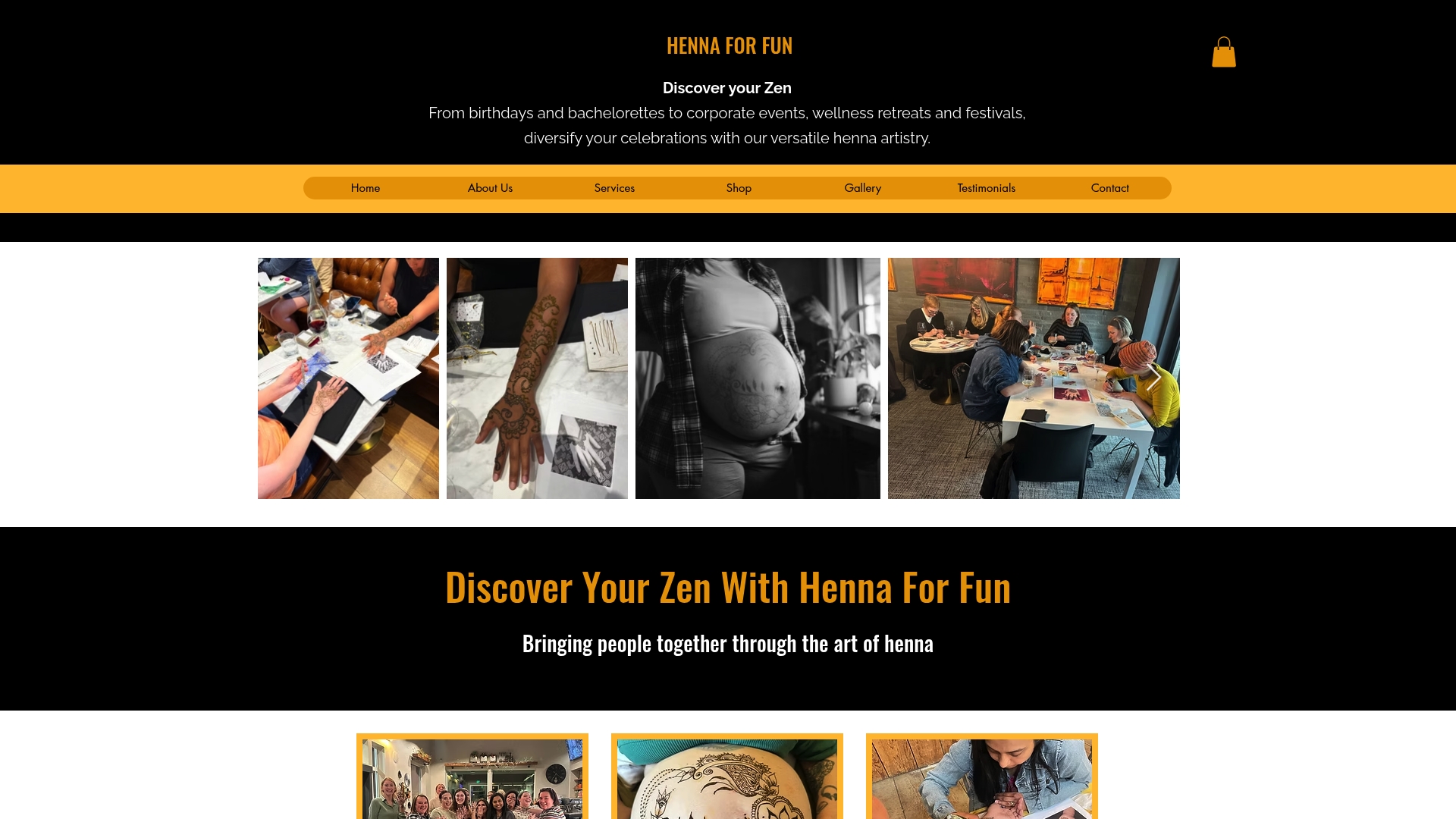
For a full-service event, Hennaforfun’s event artist services cover private parties, corporate workshops, and Whenna Events at venues across the Seattle metro area, including Bothell, Lynnwood, Snohomish, and Edmonds. Expecting a baby? The pregnancy henna service is designed specifically for maternity photoshoots and baby showers. Prefer to run your own station? The DIY Henna Kit and henna stencils ship directly to you. Private lessons in Kirkland, Bellevue, and Snohomish are available for hosts who want to build their own skills. Browse services and check availability at hennaforfun.com to book your date.
Useful sources
Source | What it supports |
Mehndi Night Decoration Ideas — shareurwedding.com | 4×5 ft zone spec, lighting guidance, standardized photo surface, immersive theme approach |
Mehendi Decor Tips — iloveindia.com | Task lighting requirements, application-area setup |
Mehendi Party Ideas — charmvows.com | Sustainable decor materials, eco-friendly alternatives |
Haldi Mehendi Decoration Ideas — chicceremony.com | Patch-test guidance, black henna warning, biodegradable station supplies |
Mehendi & Henna Ceremony Decorations — lovenspire.com | Cross-cultural inclusivity in U.S. henna events |
DIY Henna Kit — hennaforfun.com | DIY kit and stencil options, private lesson availability |
Recommended
Comments