Five Minute Mindfulness Art Exercises for Beginners (Henna Inspired)
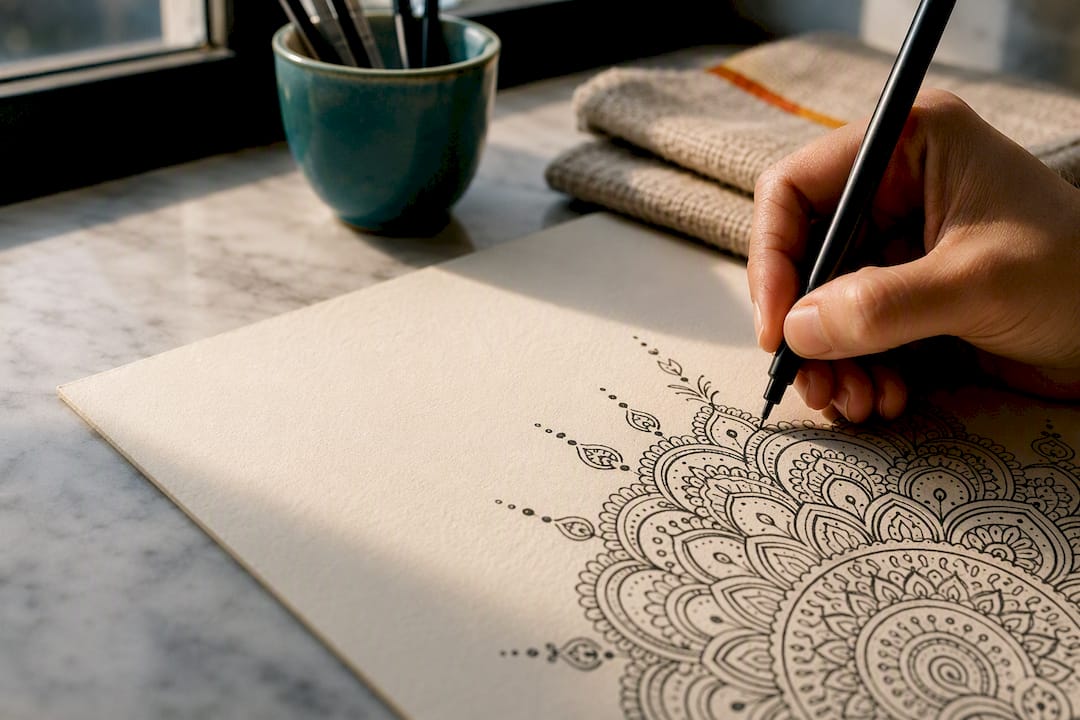
Mindfulness art exercises are short, attention-focused creative practices — think mindful doodling, breath drawing, or a watercolor wash — that shift your focus onto sensation and process instead of results. They lower stress and sharpen focus by giving your mind one simple thing to track: the pen, the color, the breath. Pick a single 5-minute exercise below, grab any paper and pen you have on hand, and start now.
TL;DR:
Practicing mindfulness art exercises for just five minutes three to five times weekly can significantly enhance focus and emotional regulation.
Repetitive pattern-making, such as Zentangle or neurographic smoothing, helps build concentration without requiring artistic talent.
Starting with short sessions and setting a timer removes pressure and increases the likelihood of establishing a consistent habit.
Combining mindful drawing with brief meditation or reflection amplifies calming effects and deepens the practice’s benefits.
Using simple supplies like paper, pens, and food coloring makes this accessible without special art skills or equipment.
Table of Contents
Six Mindfulness Art Exercises You Can Try Right Now
You don’t need a sketchbook full of talent to start. You need a timer and permission to make something imperfect. Here are six short, low-pressure entry points, ranked roughly by how little skill or setup they demand.
Mindful doodling / Zentangle (3 to 10 minutes). Draw one small repeating shape, dots, loops, cross-hatching, over and over across a small square of paper. No plan, no eraser.
Drawing your breath (3 to 5 minutes). Trace a line that rises as you inhale and falls as you exhale. The page fills with your own breathing pattern.
Color breathing / watercolor wash (5 to 10 minutes). Load a brush with one color, breathe in as you lift it, breathe out as you lay it on wet paper. Watch colors bleed into each other.
Radial or mandala drawing (5 to 15 minutes). Start from a center point and build outward in rings or petals. The National Gallery of Art’s mindful drawing exercises use this kind of structured repetition to slow attention on purpose.
Art journaling, stream-of-consciousness (5 to 10 minutes). Write a feeling word, then let a mark or scribble respond to it. Alternate word and mark until the page fills.
Flowing-line or neurographic smoothing (5 to 15 minutes). Draw loose, winding lines, then round off every place they cross into soft curves.
Pro Tip: Set a timer before you touch the pen. Deciding “10 minutes and done” removes the pressure to finish something good, which is exactly the pressure mindfulness art is supposed to remove.
How to Actually Do Five Guided Mindful Drawing Techniques
Most guides tell you what to draw. Fewer tell you how to run the actual session. Every exercise below follows the same four-beat rhythm: center, make marks, notice sensation, reflect. That structure shows up across museum programs and studio-teacher guides for a reason, it works because it gives an unstructured activity just enough shape to follow.
Before any exercise: sit down, feel your feet on the floor, and take three slow breaths. Thirty to sixty seconds is enough. This single habit, recommended by museum educators for mindful drawing sessions, does most of the work of shifting you out of task mode.
Drawing your breath. Rest your pen at the left edge of the paper. Inhale for a count of four while the line climbs; exhale for a count of six while it falls. Repeat across the page. When your mind wanders (it will), just notice the next breath and keep drawing.
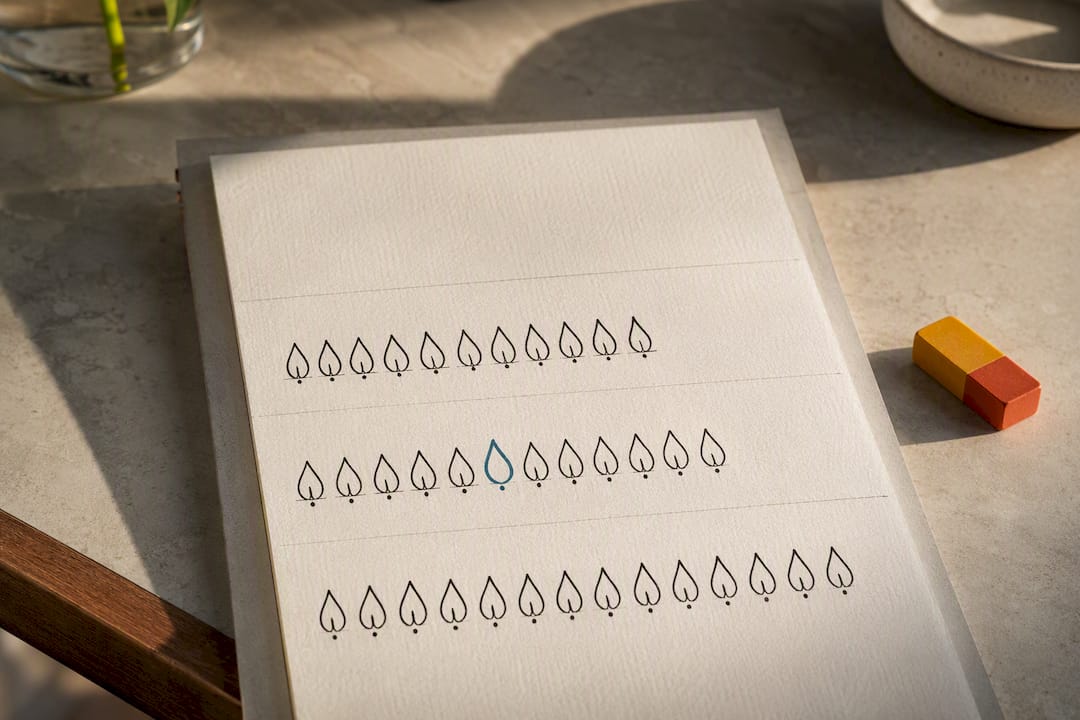
Zentangle-style mindful doodling. Draw a light pencil border around a 3 by 3 inch square. Pick one simple shape and repeat it inside the border, letting the rhythm of repetition slow your thinking rather than trying to plan a pattern.
Watercolor wash meditation. Wet the paper lightly. Dip your brush, inhale as you lift it toward the page, exhale as the color spreads. Rinse, choose a second color, and repeat for three or four washes, watching where they overlap.
Art journaling with paired prompts. Write one honest word about how you feel right now. Under it, make a mark that matches that word’s energy, jagged, round, heavy, light. Alternate for five rounds.
Neurographic smoothing. Draw four or five loose curved lines across the page so they cross each other. Working from one corner outward, round off every intersection into a soft curve until the whole page feels smoothed.
Close every session the same way: put the pen down, take one breath, and notice one thing, a color, a feeling, a sound outside, without judging it.
Pro Tip: If a shape or mark looks “wrong,” don’t fix it. Draw the next one instead. The fixing impulse is the inner critic sneaking back into a practice built to quiet it.
What Supplies You Actually Need
You don’t need an art store trip. A grocery-store notebook and a pen already cover most of the exercises above.
Core kit: plain paper, a pencil, a black pen, a few markers, and a small watercolor set (or a few drops of food coloring diluted in water).
A timer, your phone works fine, and a scrap surface or old placemat to protect your table.
No watercolors on hand? Diluted food coloring or even weak coffee gives you a wash effect for color breathing exercises.
No fine-tip pens? A ballpoint and regular printer paper handle mindful doodling and neurographic smoothing just as well.
For journaling or collage, old magazines, receipts, or ticket stubs work as texture and mark-making material.
Setup matters more than gear. Sit somewhere with a flat surface and decent light, silence your phone notifications (the timer app is the exception), and clear enough table space that you’re not balancing the paper on your knee.
How Often to Practice and What Changes First
Start with the 5-minute rule: commit to five minutes, not a masterpiece. Most people who stick with a creative habit build it on sessions this short, because five minutes fits into a lunch break or the ten minutes before bed, and a session that short is nearly impossible to skip out of exhaustion. Once five minutes feels easy, let sessions stretch naturally to 10 or 20 minutes, but never make that the entry requirement.
Aim for three to five short sessions a week, or fold in daily micro-practices, two minutes of breath drawing while coffee brews counts.
A 2024–2026 study following 894 students found that dispositional mindfulness is positively linked to creative functioning, with flow states acting as the connecting mechanism. The calmer and more absorbed people felt, the more creative output they produced.
Track it simply. Rate your mood one to ten before and after a session. Jot one line in a journal about what you noticed. If you want something more concrete, try a two-minute attention task (count backward from 100 by sevens) before and after a week of practice and compare how scattered it feels.
Why Slow, Repetitive Pattern-Making Builds Focus
Henna design and mindful art exercises share the same engine: a repeating motif that demands just enough attention to occupy the mind, without demanding so much that it turns stressful. Watching a paisley or vine pattern grow line by line down a hand produces the same steady, low-effort focus as a Zentangle square or a mandala ring. Mindfulness-based art therapy leans on this exact quality, sensory, repetitive, and forgiving of imperfection, to help ease anxiety and support emotional processing.
During private lessons and events, first-timers who came in nervous about “not being artistic” often settle into a rhythm within minutes once a repeating shape gives their hands something steady to do.
Try this: draw a single curved leaf shape five times in a row, small, then slightly larger each time, spiraling outward from a center point.
Give it five to ten minutes and notice whether your breathing slows as the pattern grows.
This is the same principle behind a henna vine, one shape, repeated with small variation, building into something whole.
Pairing Art With Journaling or Meditation
Art exercises work even better with a few minutes of reflection on either side. A short seated meditation before drawing, three to five minutes of just watching your breath, settles the mental noise that otherwise bleeds into your first few marks. You’ll notice the difference immediately: sessions that start with even sixty seconds of stillness tend to produce calmer, more even mark-making than sessions where you dive straight in distracted.
After a session, reflective journaling turns a fleeting calm into something you can actually track. Keep it low-friction: three questions are plenty.
What did I notice in my body while I was drawing?
Did my mind wander, and where did it go?
What’s one word for how I feel right now compared to before?
You don’t need paragraphs. A single sentence per question, written right after you set the pen down, captures the shift while it’s fresh. Over a few weeks, flipping back through those short notes shows you patterns your memory alone would miss, maybe Tuesday sessions always run calmer than Monday ones, or watercolor washes settle you faster than doodling does.
If meditation on its own feels hard to sit still for, mindful art gives your hands a job while your attention still gets the same settling effect. That combination, moving hands and quiet mind, is often easier for restless people than a pure breath meditation, and it’s a reasonable bridge into a more traditional sitting practice later if you want one.
Common Roadblocks Beginners Hit (and How to Get Past Them)
The biggest obstacle isn’t skill. It’s the voice that shows up the moment the pen touches paper and starts grading the result. A few patterns come up again and again.
“I’m not creative enough to do this.” Mindfulness art doesn’t ask for creativity in the traditional sense, it asks for repetition and attention. A row of dots counts. Reframing the goal from “make something good” to “notice what happens” removes most of the pressure that skill anxiety creates.
Restlessness during the first few minutes. This is normal, not a sign you’re doing it wrong. Sit with it for sixty seconds before deciding the exercise isn’t working; most people find the fidgeting fades once the hand finds a rhythm.
Forgetting to actually stop and notice. It’s easy to get absorbed in the drawing itself and skip the reflection step entirely. Setting a second, quieter timer alarm for the last thirty seconds of a session works better than trying to remember.
Inconsistent practice. Life gets busy, and a missed week can feel like failure. It isn’t. Studio-based mindfulness guides frame lapses as part of the practice itself, returning without self-judgment is the actual skill being built, not an unbroken streak.
Perfectionism sneaking back in. If you catch yourself reaching for the eraser, that’s the moment to notice the impulse and keep drawing anyway. The mark you wanted to erase is often the most honest one on the page.
How Henna for Fun Can Help You Go Deeper
If short solo exercises leave you wanting real guidance, that’s exactly where structured henna practice picks up. Henna is repetitive pattern-making with a built-in mindfulness framework, slow lines, steady breathing, and a design that only comes together if you stay present with it.
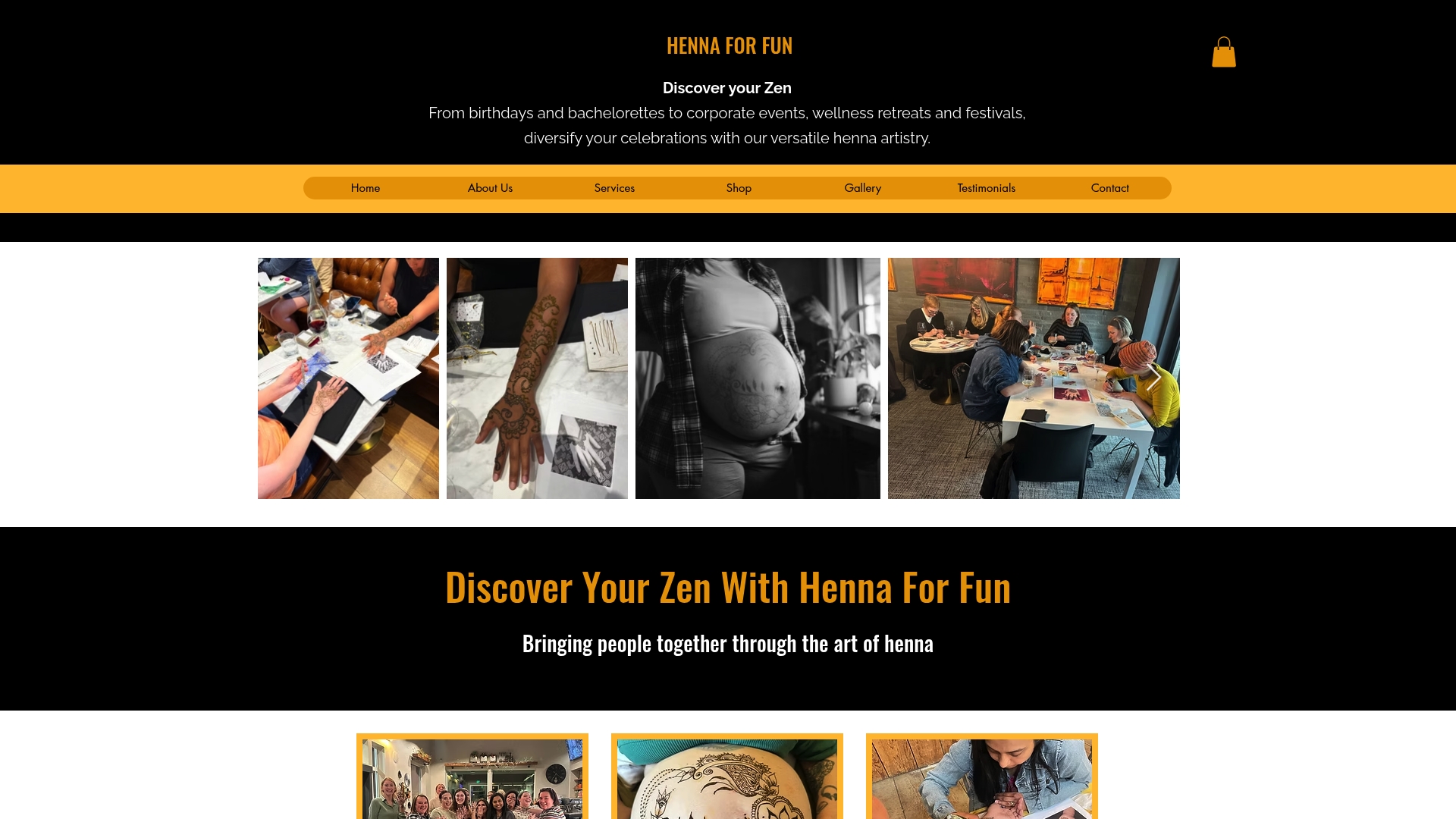
Hennaforfun’s private and group henna lessons walk you through the same kind of paced, repeating motifs used in the mandala and Zentangle exercises above, but with a teacher adjusting your grip, pressure, and pace in real time. If you’d rather practice solo first, the henna practice sheets give you ready-made repeating patterns to trace before freehanding your own, and a set of DIY henna stencils works well if you want structure without committing to freehand lines yet. Expecting parents looking for a calming, creative way to mark the milestone can also book a pregnancy henna session, and anyone curious about upcoming group sessions can check the calendar of events for the next open workshop near them. Pairing a self-care routine like this with other calming practices, as wellness writers increasingly suggest, tends to make the habit stick longer than either practice alone.
Consider booking a lesson or browsing event calendars for upcoming henna-related events near you.

One Last Push to Actually Start
Short, repeatable practice beats an ambitious plan you never open the sketchbook for. Five minutes of breath drawing done four times this week will teach you more about your own mind than one perfect hour-long session you keep postponing.
Two things to do next: pick one exercise from this list and set a timer for five minutes before you finish reading anything else today, and write one line afterward about what you noticed. If the repetition of it appeals to you, look at the henna practice sheets or find an upcoming workshop on the calendar. Either one gives you a next rep to build on.
— Angana
Sources
Recommended
Comments