Rainy Day Party Activities: 3 Stations for All Ages, Plus Henna

If rain threatens your party, pick one active game, one creative station, and one calm corner, and you’ve solved the problem before it starts. That mix works because it covers movement, focus, and rest without depending on outdoor space. The list below sorts options by audience and prep level so you can choose three that fit your group, plus a backup for when the first idea runs its course.
TL;DR:
Indoor activities should cover different energy levels, including active games, creative tasks, and calm zones, to keep guests engaged and balanced.
For smaller spaces, swap high-energy activities for seated or confined versions, such as charades or scavenger hunts, to maintain safety and flow.
Activities like henna stations, scavenger hunts, and creative crafts can be set up quickly and managed easily by hired vendors or with minimal prep.
Tech can enhance activities like trivia or scavenger hunts if paired with paper backups, ensuring the party stays flexible despite possible connectivity issues.
Mixing short movement bursts with quieter activities helps manage energy fluctuations, especially when space and guest ages vary.
Table of Contents
Quick Activity Shortlist by Category
You don’t need a master plan, just three or four solid picks that cover different energy levels. Here’s a fast-scan list organized by type, with prep level and ideal group size so you can grab what fits and move on.
Freeze dance or 5-minute dance bursts: low prep, works for 4 to 20 kids, screen-free, pulled from CDC classroom movement guidance.
Balloon keep-up relay: zero prep beyond balloons, best for 6 to 15 kids in a cleared room, budget-friendly.
Indoor treasure hunt: moderate prep (write clues ahead), scales from 3 players to a full house, screen-free.
Painting or craft table: moderate prep, fits 2 to 12 people, works for kids and adults with different project levels.
Bake-your-own or decorate-your-own treats: moderate prep, best for 4 to 10 people, doubles as the food activity.
Blanket fort or reading nook: low prep, fits any headcount as a rotating calm zone.
Murder mystery or trivia night: higher prep, ideal for 6 to 12 adults or teens.
Karaoke or a tasting flight: low to moderate prep, flexible for 4 to 20 adults.
For smaller spaces, swap the dance burst for a seated game like charades, and trade the obstacle course for a scavenger hunt confined to one or two rooms. Tag each pick as screen-free or low-prep in your head as you plan, since a party built on two low-prep anchors and one higher-effort centerpiece almost always runs smoother than one built on four ambitious ideas.
Rainy-Day Activities for Kids With Setup and Safety Tips
Kids need structure more than they need elaborate props. A few well-run activities beat a long list of half-finished ones.
Indoor scavenger hunt: for ages 4 to 6, use picture clues taped around the house; for ages 7 to 10, write short riddles; for tweens, hide clues that require teamwork to solve. Keep the hunt to 10 to 15 minutes so energy stays high.
Blanket fort base camp: gather couch cushions, clothespins, string lights, and a few sheets. Assign one adult to check that furniture used as anchors won’t tip, then let kids build for 15 to 20 minutes before using the fort as a reading or snack spot.
Short active games: freeze dance, balloon keep-up, and “Up, Down, Stop, Go” are all classroom-tested movement bursts that run 1 to 5 minutes and help kids expend energy indoors. Set a timer so the game ends before attention drifts.
Simple craft projects: paper plate masks, salt dough ornaments, or a coloring station need only paper, washable paint, and a plastic tablecloth. Prep takes 10 minutes; clean-up is faster if you set out a “trash bowl” on the table from the start.
Food activities: decorate-your-own cupcakes or mini pizzas work well, but label ingredients clearly for allergies and skip small hard candies or whole nuts as toppings for kids under five, since they’re common choking hazards.
Pro Tip: Run the messiest craft first, while energy and patience are both high, so cleanup doesn’t compete with a tired, hungry group later.
Planned indoor play that mixes movement, creative tasks, and social interaction supports several areas of a child’s development at once, which is part of why alternating a scavenger hunt with a quiet craft works better than either one alone. Keep one adult stationed near any food table and another circulating during active games, especially with a mixed-age group.

Family-Friendly Activities That Scale Across Ages
Some formats bend easily to fit a five-year-old and a grandparent in the same round. These work because the roles inside them can be simple or complex depending on who’s playing.
Pretend café or shop: younger kids take orders and “cook,” older kids handle pretend receipts or pricing, and adults play customers. The format stretches from 10 minutes to an hour depending on how detailed you let it get.
Layered indoor camping: set up a fort as the sleeping area, a snack table as the “camp kitchen,” and a flashlight story corner. Each station can run at once, so different age groups gravitate to what suits them.
Family cooking project: pick a simple recipe like personal pizzas or decorated cookies, and assign roles: younger kids measure or decorate, older kids handle mixing, adults manage the oven. It doubles as the food activity and a shared task.
Board and group games: choose titles with adjustable rules, like Uno or a simple trivia game, so younger players can use easier categories while adults take harder ones. A screen-hybrid option, like a trivia app read aloud by one host, keeps the format low-tech while still using a device for content instead of gameplay.
The trick with cross-age activities is giving each person a job sized to their ability rather than a scaled-down version of the same task. A four-year-old “customer” at the pretend café has just as much fun as the twelve-year-old “cashier,” because both roles feel real to them.
Adult and Teen Party Formats
Older guests want a format with a clear goal, whether that’s solving something, making something, or just talking without a phone in hand.
Murder mystery: pick a script sized to your headcount. A 6-person mystery with simple roles runs smoothly in under two hours; anything past 12 guests needs a script built for larger casts or it drags. Assign roles ahead of time by email so guests arrive ready.
Paint night: set up drop cloths under each seat, pre-pour paint into small cups, and choose one beginner-friendly image so nobody feels behind. Budget at least 45 minutes for painting and drying time before moving furniture back.
Tasting flight or karaoke: a small tasting station (tea, chocolate, or non-alcoholic mocktails) needs almost no setup and works for any group size. Karaoke needs a speaker and a phone or laptop with a lyrics app, but a printed lyrics binder is a solid non-digital fallback if the internet connection is unreliable.
Pro Tip: Cap murder mystery casts at your actual guest count, not the script’s maximum. A mystery built for 10 played by 6 people feels thin, and one built for 6 played by 12 leaves half the room without a role.
Low-tech social games like two truths and a lie or a drawing-guess game need nothing but paper, while digital-hybrid formats like a shared trivia app work as long as you have a backup deck of trivia cards in case the WiFi lags.
Low-Prep and Budget-Friendly Activities
Some of the best rainy-day options cost nothing and take five minutes to set up.
Sock puppet making: use old socks, buttons, and fabric scraps for a zero-cost craft that works for kids and bored teens alike.
Living room bowling: empty water bottles and a soft ball turn any hallway into a bowling lane.
Paper airplane contest: printer paper and a stretch of hallway are all you need for a quick, loud, screen-free burst of energy.
Indoor picnic: a blanket on the living room floor with sandwiches and juice boxes recreates the outdoor plan without needing dry weather.
Charades or Pictionary with printer paper: skip the store-bought version and write prompts on scrap paper instead.
Swap pricier craft supplies for household staples: cereal box cardboard instead of poster board, dish soap and water instead of bubble solution, and old magazines instead of printed collage material. For smaller spaces, shrink the paper airplane contest to a tabletop target toss instead of a hallway race.
Alternate short 5 to 10 minute active bursts with 20 to 30 minute calmer activities to keep energy manageable rather than letting excitement build until it boils over. For guests with mobility or sensory needs, offer a seated version of active games (tossing a soft ball instead of running relays) and keep one low-stimulation station, like the reading nook, available the entire party.
Setting Up Stations, Timing, and a Safety Checklist
A party with three or four activities running at once needs a layout that keeps people moving instead of bunching up in one room.
Arrange stations by noise level: put active games farthest from the calm corner, and place the food table between them so it acts as a natural buffer.
Build a two-hour timeline: 15 minutes for arrival and mingling, 30 minutes of active games, 45 minutes for the craft or food station, and a 30-minute wind-down with the calm corner or a movie.
Assign one adult or older teen per station if you have help available, and give each a one-line job: “keep the craft table stocked,” “run the timer for games,” or “watch the snack table.”
Post a simple safety checklist near the entrance: wipe up any wet floor spots from dripping umbrellas, keep small choking-hazard items away from kids under five, and label any food with allergens.
CDC guidance backs short indoor movement bursts of 1 to 5 minutes as an effective way to break up passive stretches of a party, which is exactly what the active phase in this timeline is built to do. Sticking to a loose schedule, rather than a rigid one, keeps the party flexible if one station runs long.
Henna Station How-To: A Calming, Creative Party Centerpiece
A henna table gives guests a quiet, hands-on activity that doubles as a keepsake. For a home setup, you’ll need henna cones, a stencil set for beginners, paper towels, and a small drying area with good light. Budget 5 to 10 minutes per guest for a simple stenciled design, or 20 to 30 minutes for detailed freehand work.
Guided group lesson: one host demonstrates basic patterns while guests practice on paper first.
Stencil corner: pre-cut stencils let kids and beginners get a clean design fast.
Pregnancy henna option: a belly design works well as a centerpiece activity for baby showers.
Always do a small patch test on the wrist at least a day ahead to check for a reaction, and keep the drying area away from fabric or furniture that could stain. A henna design lasts one to three weeks, which turns a single evening into a lingering conversation piece and, for many guests, a small piece of connection to the group who created it together.
Pro Tip: Set a visible timer at the henna table so guests waiting their turn know roughly how long the line will move, which keeps the station from becoming a bottleneck.
Bringing Technology Into an Indoor Party Without Losing the Room
Screens aren’t the enemy at a rainy-day party, but they work best as a supporting activity rather than the main event. A virtual scavenger hunt app can guide kids or teens through a photo-based hunt around the house, checking off items on a shared list without anyone needing to print clues. Interactive trivia apps let one host run a quiz on a shared screen while everyone else answers from their own phone, which keeps a large group engaged at once.

For younger kids, a simple augmented reality coloring app can turn a flat drawing into a 3D character on a tablet screen, giving the craft table a five-minute bonus round. Karaoke apps or a shared music queue also count as light-touch technology that supports a dance break rather than replacing it.
The rule of thumb: use technology to organize or enhance an activity that still has guests moving, talking, or making something, and always have a paper backup ready. A scavenger hunt list on index cards, or a printed trivia deck, means a spotty connection never stalls the party.
Balancing Creativity With Calm at Indoor Events
The parties that hold together best aren’t the ones with the most activities, they’re the ones where energy rises and falls on purpose. A dance break followed by a quiet craft table gives a room room to breathe, and that rhythm matters more than any single game you pick. Match the complexity of your activities to your actual headcount and actual space, not the version you’d run in a bigger house with more hands on deck.
— Angana
Adding a Turnkey Henna Station to Your Next Party
Running every station yourself gets exhausting fast, and a henna table is one activity you can hand off entirely. Henna For Fun brings the calming, hands-on piece of the party to you, whether that’s a home gathering, a baby shower, or a corporate team event, so you get one less station to manage on party day.
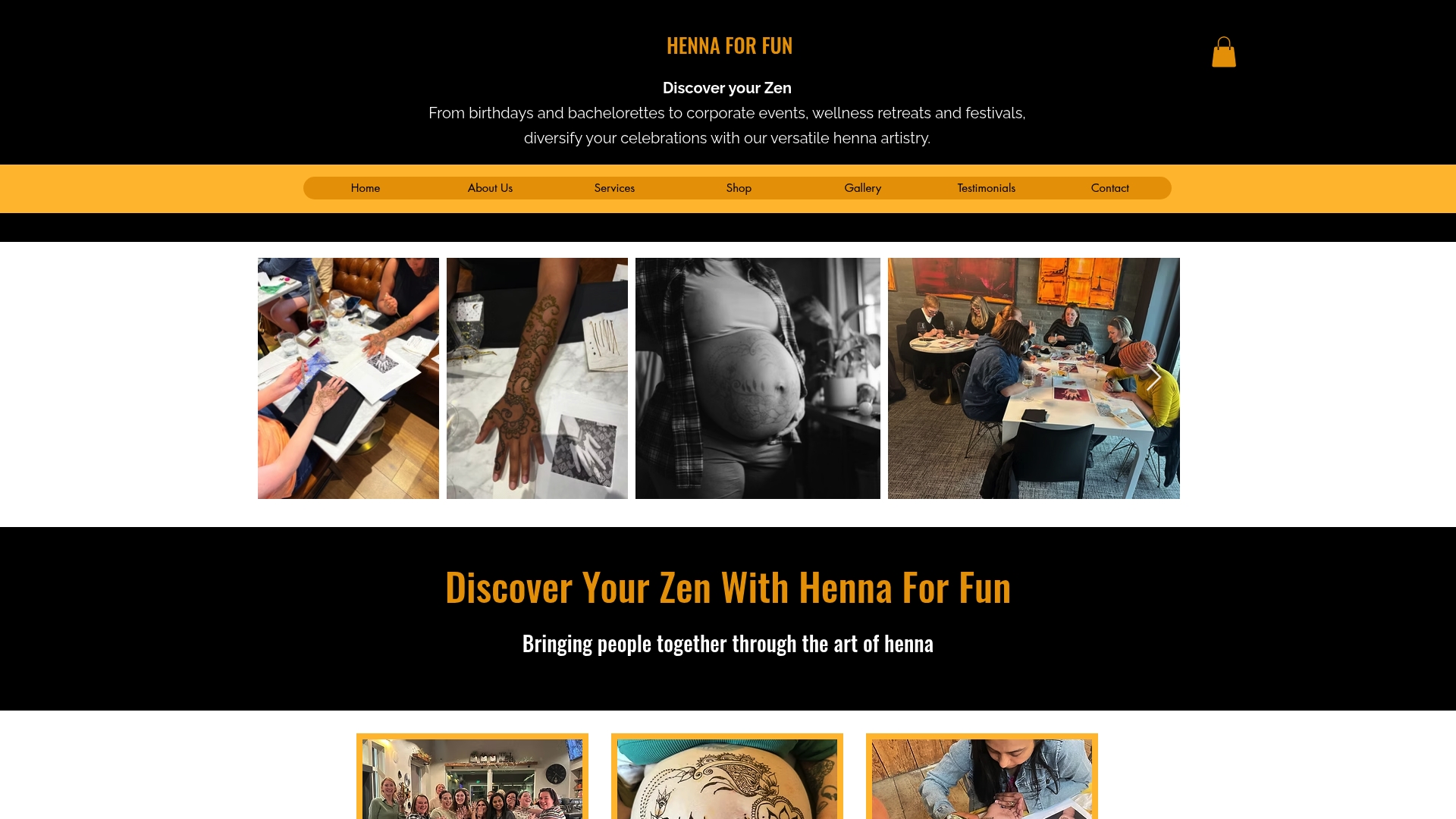
Whenna Events cover home and public party bookings, with packages priced starting per person depending on design complexity, and an hourly add-on if your group wants to keep going. Expectant parents can book a pregnancy henna package for a shower or a maternity photoshoot, and hobbyists who want to run their own station can take a private lesson first.
Whenna Events: book a henna station for a home party, winery event, or public gathering.
Baby shower or maternity henna: pregnancy henna packages built for showers and photoshoots.
Private lessons: learn to mix and apply henna before hosting your own station.
Package type | Starting price | Best for |
Basic Whenna Event | starting price per participant | Small home gatherings |
Plus Whenna Event | starting price per participant | Groups wanting more design options |
starting price | Smaller maternity celebrations | |
starting price | Hosts who want to DIY their own station |
Pricing and package details are listed in full on the services page, so you can match a package to your guest count before booking.
Sources
Activity guidance in this article draws on CDC classroom movement tips, CDC active play recommendations, and a Time list of rainy-day activities. For more party setup ideas, see scalable home party entertainment formats.
Classroom Physical Activity Ideas and Tips
FAQ
How do I have a party when it’s raining?
Move outdoor plans indoors by picking one active game, one craft or food station, and one calm corner, then set a loose timeline so energy rises and falls naturally. Short indoor movement bursts of 1 to 5 minutes work well to break up quieter stretches.
What should I do if it rains on a birthday party?
Keep the theme intact by moving it indoors rather than canceling it: an outdoor picnic becomes a blanket picnic on the living room floor, and yard games become a scavenger hunt or dance break. A Time roundup of rainy-day activities points to indoor treasure hunts and baking projects as reliable stand-ins for outdoor plans.
What are good rainy-day activities to do at home?
Strong options include indoor scavenger hunts, blanket forts, baking or decorating treats, beauty tips that actually work, craft stations, and short dance or movement games. Mixing an active game with a quieter craft or food activity, as recommended in CDC guidance on indoor play, keeps a group from getting restless or overstimulated.
What are simple rainy-day activities for kids and adults together?
Formats like a pretend café, a family cooking project, or a board game with adjustable difficulty let kids and adults play the same activity with different-sized roles. A henna station also works well across ages, since both quick stencil designs and longer freehand sessions can run at the same table.
Can technology be part of a screen-free rainy-day party?
Yes, as long as it supports the activity instead of replacing it: a virtual scavenger hunt app or shared trivia quiz can guide a group without turning the party into screen time. Keeping a paper backup, like printed clues or a trivia deck, means the party keeps moving even if the connection doesn’t.
Recommended
Comments